
Why Are There So Many Mosquitoes in Alaska Some Years?
October 27, 2026 3:26 pmEvery Alaskan knows the moment the snow pulls back, the days stretch toward nineteen hours of light, and a cloud of biting insects appears over the yard. Some summers feel manageable. Others feel relentless. If you have ever wondered why are there so many mosquitoes in Alaska during certain years, the answer is not bad luck. It comes down to a handful of measurable forces: water, temperature, predators, and competition among insects. Pied Piper Pest Control has watched these cycles play out on Alaskan properties since 1965, and the patterns are consistent enough to plan around.
Why Are There So Many Mosquitoes in Alaska? The Four Forces Behind a Bad Year
Researchers who study northern insects keep returning to the same four variables. University of Alaska Fairbanks entomologist Derek Sikes has explained in an Alaska Public Media interview on mosquito cycles that a mosquito year is shaped by water, temperature, predators, and competitors, and that a truly bad year happens when all four tilt in the mosquitoes’ favor.
The biology explains why those forces matter so much. Most Alaska mosquitoes belong to the genus Aedes. They spend winter as eggs in water, hatch with the spring melt, feed and grow as larvae in shallow pools, and emerge as adults in May. Only females bite, because they need blood to produce eggs, and the carbon dioxide you exhale is what triggers them to seek a host. That is why they swarm around your head first. Alaska has 30 or more mosquito species, but the early-season Aedes do most of the damage to a summer evening.
| Force | What changes | Effect on mosquito numbers |
|---|---|---|
| Water | Snowmelt, rain, and shallow pools that stay full into early summer | More larval habitat produces more adults |
| Temperature | Steady spring warming and long daylight | Faster larval development and a synchronized adult emergence |
| Predators | Dragonfly nymphs, aquatic beetles, and spiders | Fewer predators means more larvae survive |
| Competitors | Other aquatic insects sharing the same pools | Less competition allows larger mosquito broods |
Water: Meltwater, Muskeg, and Poor Drainage
Alaska has an enormous supply of slow, shallow water, including bogs, sloughs, muskeg, and ponds that form wherever snowmelt has nowhere to go. Aedes females lay eggs in spots that flood each spring, so the longer meltwater lingers, the more larvae hatch. In much of Interior and northern Alaska, permafrost holds water near the surface. In Southcentral, where permafrost is patchy or absent, poorly draining muskeg, silty soils, and ground that is still frozen during breakup produce the same result: water that sits instead of soaking in.
Common pooling spots around Alaskan properties include:
- Saturated muskeg and low pockets near property lines that stay wet long after rain
- Poorly drained yard areas where meltwater collects each spring
- Clogged gutters, downspout extensions, and low garden beds that hold runoff
- Tarps, boat covers, buckets, wheelbarrows, and planters left outdoors through the shoulder season
Temperature: Early Springs and Long Summer Days
Warmth speeds up larval development. A steady spring melt followed by long daylight lets larvae mature quickly, so adults emerge together and arrive in dense waves. A cold or late spring usually delays hatching rather than reducing it. Local extension specialists have noted that a snowy winter protects overwintering eggs from freezing, which means a late spring can still end in heavy swarms the moment temperatures climb.
Predators and Competitors: The Hidden Variable
Mosquito larvae share their pools with dragonfly nymphs, aquatic beetles, and other insects, and adult mosquitoes are eaten by spiders and birds. When something removes those neighbors, the larvae that remain have the pool to themselves. This is the least visible of the four forces, yet it explains some of the most surprising swings from one summer to the next.
What Makes One Alaska Mosquito Season Worse Than the Last
Most people assume a wet year always means a bad mosquito year. The real picture is more interesting, and it helps explain why the worst seasons can arrive without warning.
Why Are There So Many Mosquitoes in Alaska After a Dry Summer?
Drought can set up a rebound. A dry summer empties many temporary water bodies, and in the process it kills a large share of the insects that normally prey on or compete with mosquito larvae. The following year, rain and snowmelt refill those same pools. Mosquitoes recolonize them quickly, and with far fewer predators and competitors present, their numbers can grow enormous. Sikes has pointed to this effect when explaining why a dry summer does not bode well for the next season.
Why Rainfall Alone Does Not Predict a Bad Year
Entomologists have not found a strong, reliable link between rainfall and mosquito abundance. Wetter years often produce more mosquitoes, but there are exceptions, and abundance can be higher after a drought year. Water matters, but it works together with temperature and with the survival of predators and competitors. That is why a single weather report rarely tells you what the season will feel like.
Why Blanket Spraying Can Backfire
The same logic applies to broad insecticide spraying. Indiscriminate treatment can wipe out the predators and competitors that keep mosquito larvae in check, which mimics the drought effect and can leave a landscape friendlier to mosquitoes over time. Sikes has cautioned against mosquito spraying for exactly this reason. A habitat-focused approach that reduces breeding sites and treats selectively tends to hold up better across a full season.
How a Warming North Is Reshaping Alaska’s Mosquito Habitat
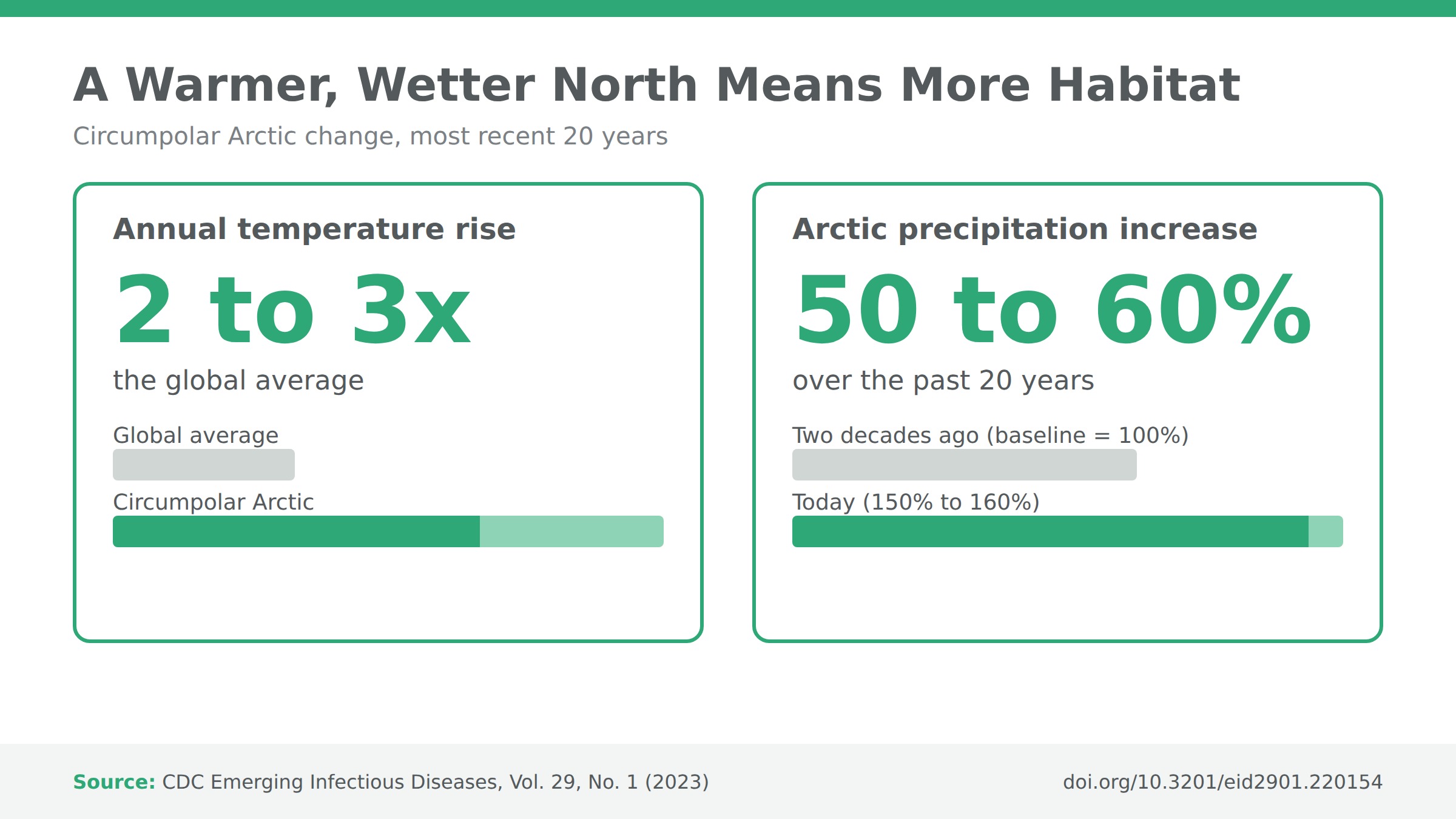
The wider climate picture adds pressure on top of those local forces. CDC-published research on mosquito-borne viruses in the North reports that annual temperatures in the circumpolar Arctic are rising two to three times faster than the global average, and that Arctic precipitation has increased by 50% to 60% over the past 20 years. Some newer analyses put the pace of Arctic warming even closer to four times the global rate. Warmer springs shorten larval development, and added moisture means more shallow water for eggs to hatch in.
Permafrost, Thaw, and the Future of Standing Water
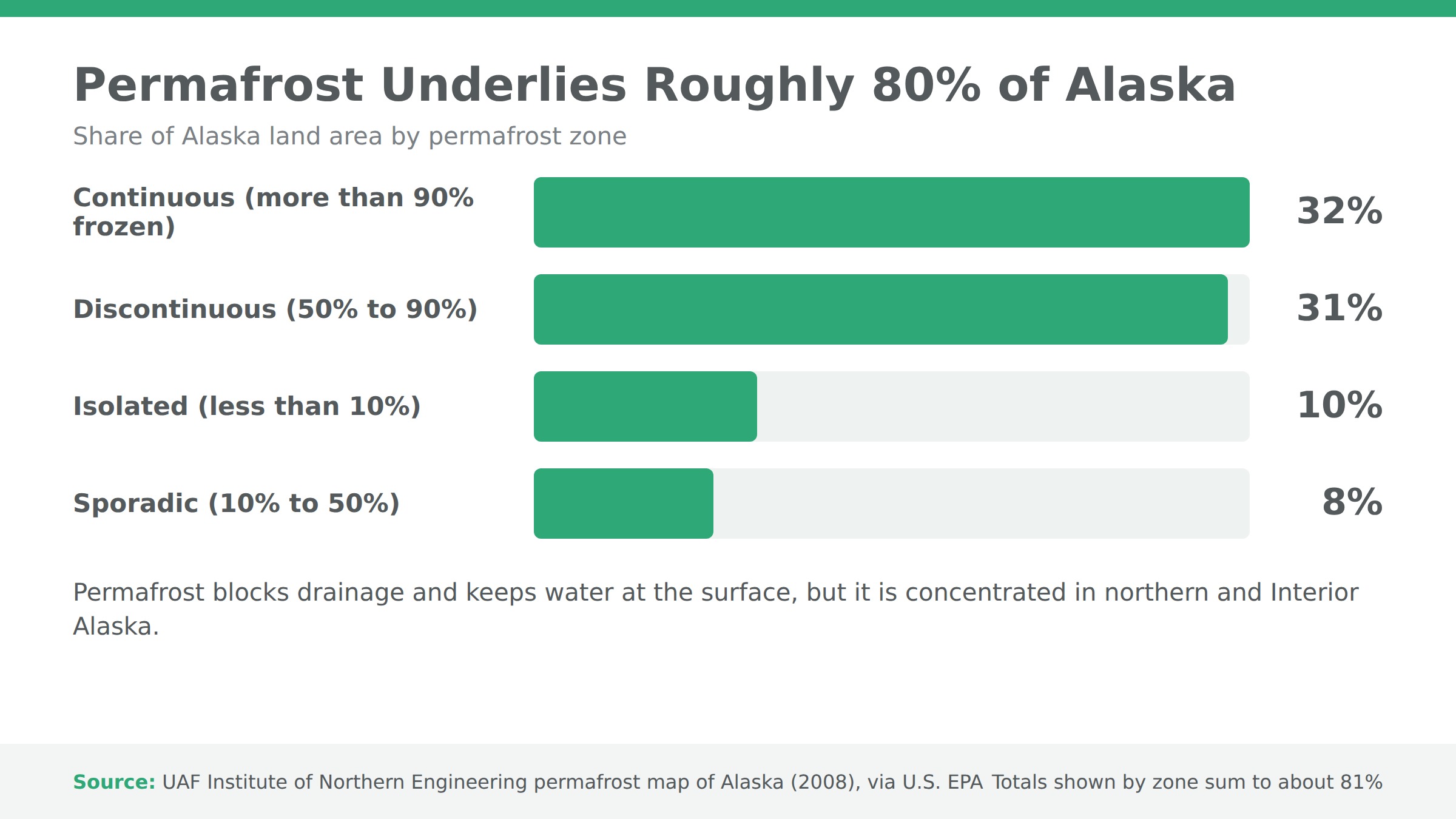
Permafrost shapes where water pools across the state. The U.S. Geological Survey notes that permafrost covers about 85 percent of Alaska, while the University of Alaska Fairbanks permafrost map puts the figure near 80 percent. Continuous permafrost in the north and discontinuous or sporadic permafrost across parts of the Interior. Frozen ground blocks drainage and keeps water at the surface, which is ideal for larvae. Over the very long term, thaw could change that picture. Sikes has suggested that as permafrost disappears from northern Alaska, there will be less standing water, and mosquito populations there will likely shrink over a span of centuries. In the meantime, the near-term trend still favors habitat that stays wet.
Southern Mosquito Species Are Moving North
Warming also shifts which species live where. Sikes has noted that Culex tarsalis, a mosquito that can carry West Nile virus, has been moving north and has been detected in Alaska. The disease has not followed, but it is a reminder that mosquito communities are not fixed. Species that were once rare at this latitude may become more common as conditions change.
Where Mosquitoes Concentrate Around Alaska Homes and Businesses
Two properties on the same street can have very different mosquito pressure. Wind, shade, and moisture decide where adults rest and where larvae develop.
Forest Edges and Sheltered Yards
Mosquitoes are weak fliers, and they avoid wind. Dense spruce and birch stands cut wind speed, hold humidity, and keep air near the ground cooler and calmer, which is exactly what resting adults prefer. If your property backs up to a wooded edge or a wet low spot, expect that boundary to be where mosquito pressure concentrates through June and July.
Open, Windy Sites
Open ground, ridgelines, and coastal areas with steady breezes see fewer mosquitoes at the point where you are standing, because adults struggle to hold position in moving air. Even so, a single neglected puddle or clogged gutter can produce enough larvae to cause trouble for the whole yard.
| Location | Why mosquitoes favor it | What helps |
|---|---|---|
| Wooded property edges | Calm, humid, shaded air for resting adults | Thin brush and lower branches to improve airflow |
| Low, wet corners of the yard | Meltwater and rain collect and sit | Regrade or add drainage so water moves off |
| Gutters and downspouts | Debris holds shallow water for weeks | Clean before breakup and again in midsummer |
| Containers, tarps, and covers | Small pools form in folds and basins | Store upside down or empty weekly |
| Retention ponds and ditches | Slow, vegetated water suits larvae | Targeted larval management and vegetation control |
Retention ponds, drainage ditches, and shaded patios are common on commercial grounds and outdoor seating areas, and they often need a plan of their own because staff and customers are outdoors during peak biting hours.
Do Alaska Mosquitoes Spread Disease?
Alaska is often described as the only state where mosquitoes do not transmit disease to people, and that remains good news for residents. Researchers are still watching the North closely, though. California serogroup viruses, including Jamestown Canyon virus and snowshoe hare virus, circulate through northern mosquito populations in species of Aedes, Culiseta, and Anopheles. A CDC-published study of northern Canada found antibodies to these viruses in 63% of caribou, 28% of polar bears, 12% of red foxes, and 4% of Arctic foxes, showing how widely exposure reaches across northern ecosystems.
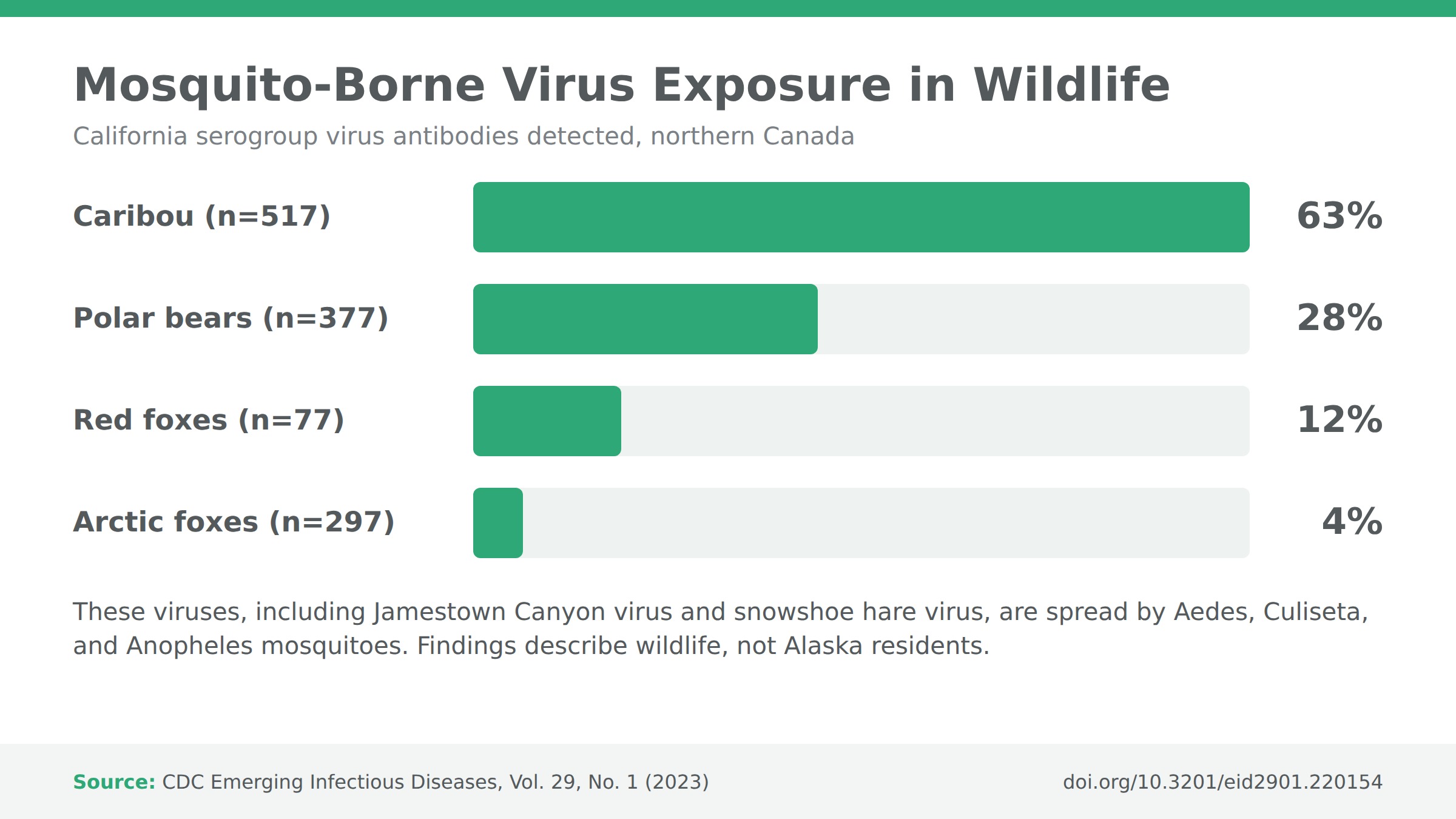
Those findings concern wildlife, not Alaska residents, but they explain why surveillance continues as the North warms. For homeowners, the practical takeaway is simple: mosquitoes are a comfort and quality-of-life problem first, and reducing breeding habitat before populations build is far more effective than reacting after the season peaks. Mosquitoes are also only one of the seasonal nuisances Alaskan households face, and the full range of seasonal pest solutions covers the rest of the year.
How to Reduce Mosquito Pressure Before the Next Heavy Season
You cannot control the weather, but you can control how much habitat your property offers. The best results come from a short list of habits done consistently from breakup through August.
Remove Standing Water Every Week
Larvae need only a small amount of still water to develop, and a warm pool can produce adults within a couple of weeks. A weekly walk around the yard keeps that cycle from finishing. Households that want ongoing support can ask about home and yard protection plans that include a seasonal property check.
- Empty buckets, wheelbarrows, toys, and planter saucers
- Clear gutters and downspouts before breakup and again in midsummer
- Store boats, tarps, and covers so water cannot pool in the folds
- Refresh birdbaths and pet bowls frequently
Reshape Shade, Vegetation, and Drainage
Adult mosquitoes rest in cool, damp, windless spots. Trimming dense brush, raising the lowest tree branches, and mowing tall grass near patios and play areas reduces daytime resting cover. If a low corner of the yard floods every spring, regrading or adding a drain can remove a breeding site that no amount of repellent will solve.
Choose Targeted Mosquito Management Over Blanket Spraying
A strong plan treats the places where larvae develop and the places where adults gather, rather than coating everything. Targeted treatment for biting insects works best when it follows integrated pest management principles: inspect first, correct conditions that favor mosquitoes, and apply treatments only where they are needed. That approach protects the beneficial insects that keep larvae in check, and it takes pets, children, and the surrounding habitat into account.
What a Property Assessment Looks For
- Standing water sources and slow-draining areas
- Proximity to wetlands, ponds, and drainage ditches
- Shaded, damp vegetation near outdoor living spaces
- Gutter, downspout, and grading problems
- Seasonal timing for the most effective treatment window
Plan Ahead for Next Season
Mosquitoes are woven into Alaskan summers, and no amount of preparation will remove them entirely. What preparation changes is how much of the season you spend swatting versus enjoying your yard. Managing the conditions behind a population spike, including standing water, sheltered breeding pockets, and poor drainage near structures, is where the real leverage sits. Talk with our Alaska pest specialists about a seasonal plan built around your property and the conditions that shape mosquito pressure where you live. We have been watching these cycles for more than 60 years, and we know what works here.
Frequently Asked Questions About Mosquitoes in Alaska
Why are there so many mosquitoes in Alaska some years?
Four forces decide a mosquito year: water, temperature, predators, and competitors. When snowmelt and rain keep shallow pools full, spring warms steadily, and fewer predators and competing insects survive in those pools, mosquito numbers can climb sharply. A dry summer followed by a wet season can be an especially strong setup.
Are mosquitoes worse after a dry summer in Alaska?
They can be. Drought dries out temporary pools and kills many of the insects that normally eat or compete with mosquito larvae. When rain refills those pools the following year, mosquitoes can move in with little opposition. Researchers have not found a strict rule linking rainfall to mosquito numbers, so the pattern is common but not guaranteed.
What are those giant-looking mosquitoes in Alaska?
Those are almost always crane flies. They have long legs and a slender body, but they do not bite. Adults feed on nectar or do not feed at all during their short adult life.
Will climate change bring more or fewer mosquitoes to Alaska?
In the near term, warmer and wetter conditions favor mosquito development, and some southern species are moving north. Over a very long horizon, thawing permafrost could reduce standing water in northern areas, which a University of Alaska Fairbanks entomologist says could mean fewer mosquitoes there. For Southcentral properties, planning for heavy seasons remains the safer approach.
Do mosquitoes in Alaska carry diseases?
Alaska is often described as the only state where mosquitoes do not transmit disease to people. One mosquito species that can carry West Nile virus has been found in the state, but the disease itself has not appeared. Researchers still monitor northern mosquito-borne viruses such as Jamestown Canyon virus and snowshoe hare virus, which have been detected in wildlife and mosquitoes across northern North America.
What smell do mosquitoes hate most?
No scent works as well as a registered repellent. CDC-recommended active ingredients include DEET, picaridin, IR3535, and oil of lemon eucalyptus. Plant scents such as lavender, peppermint, and citronella may offer brief relief, but they fade quickly.
Can you get rid of mosquitoes in your yard for good?
Not entirely, because mosquitoes breed across the surrounding landscape. The realistic goal is to reduce numbers where you spend time. Removing standing water, trimming damp shaded vegetation, and using a targeted management plan make the biggest difference.
Categorised in: Insect Control
This post was written by Pied Piper Team