
Wasp control in Alaska requires more than spraying the insects you can see. Active nests can be hidden behind siding, inside wall voids, beneath decks, along rooflines, underground, or in other protected areas where activity continues until the source is addressed. At Pied Piper Pest Control, we provide professional wasp, yellow jacket, and bee control for homes and businesses using inspection-first methods designed to identify the insect, locate the nest, and choose the right treatment for the situation.
Stinging insects become especially difficult when they establish nests close to doors, decks, walkways, sheds, play areas, garbage storage, work areas, or other places people use every day. What starts as occasional activity can become a much bigger concern as a colony grows, particularly when wasps or yellow jackets begin defending an established nest.
Common Wasp, Yellow Jacket, and Stinging Insect Problems
Not every flying insect behaves the same way, and different nesting locations require different treatment strategies. A visible nest beneath an overhang is very different from insects repeatedly disappearing through siding, entering a wall cavity, or moving into a ground opening.
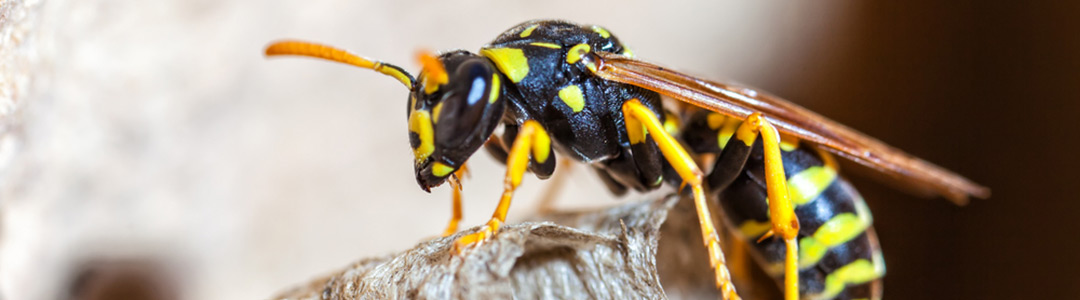
Yellow Jacket Control
Yellow jackets can become highly defensive around established nests and are often noticed around food, garbage, decks, patios, entryways, and other busy outdoor areas.
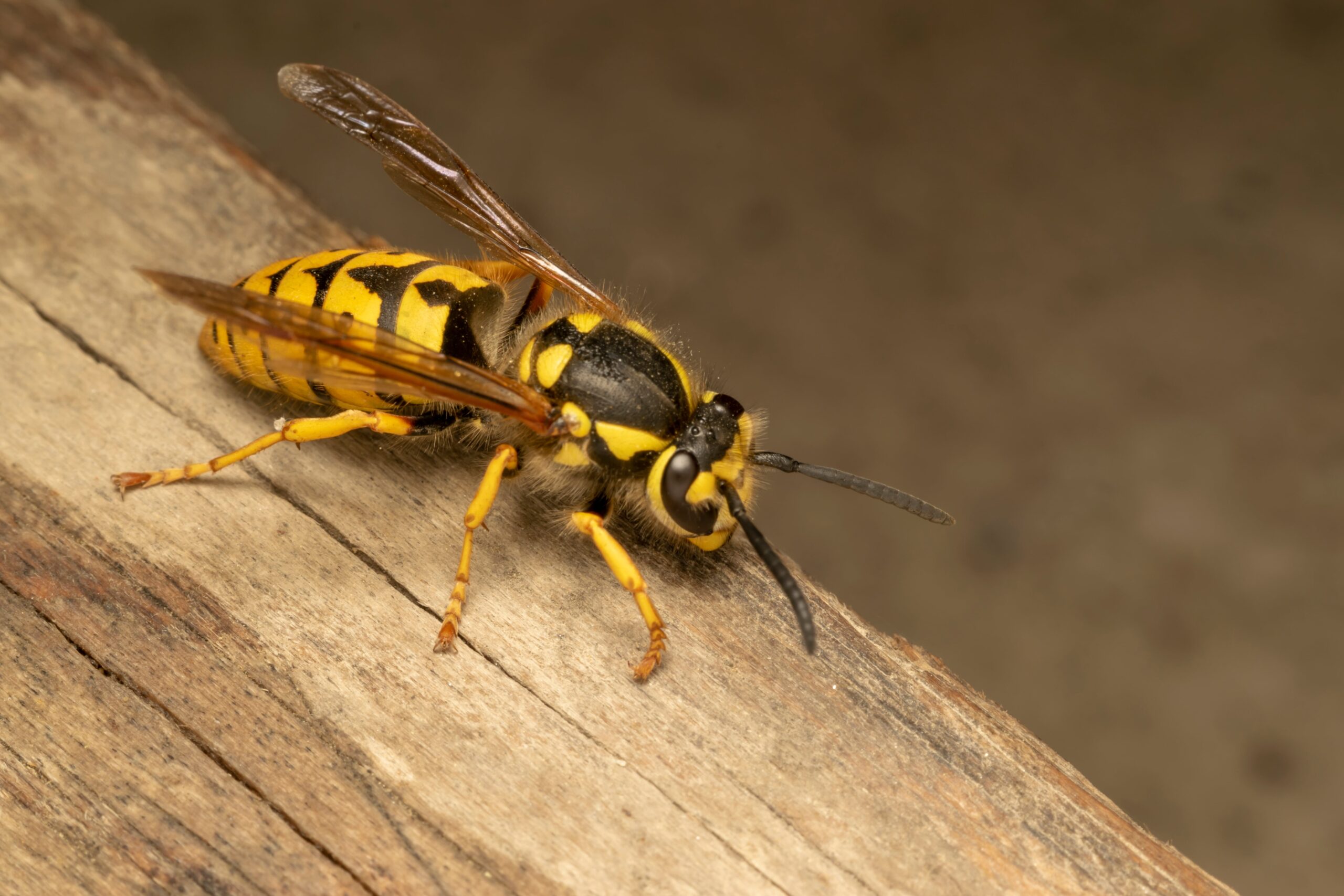
Wasp Nest Removal
Exposed nests may appear beneath eaves, overhangs, decks, sheds, railings, rooflines, and other protected surfaces where colonies can develop undisturbed.
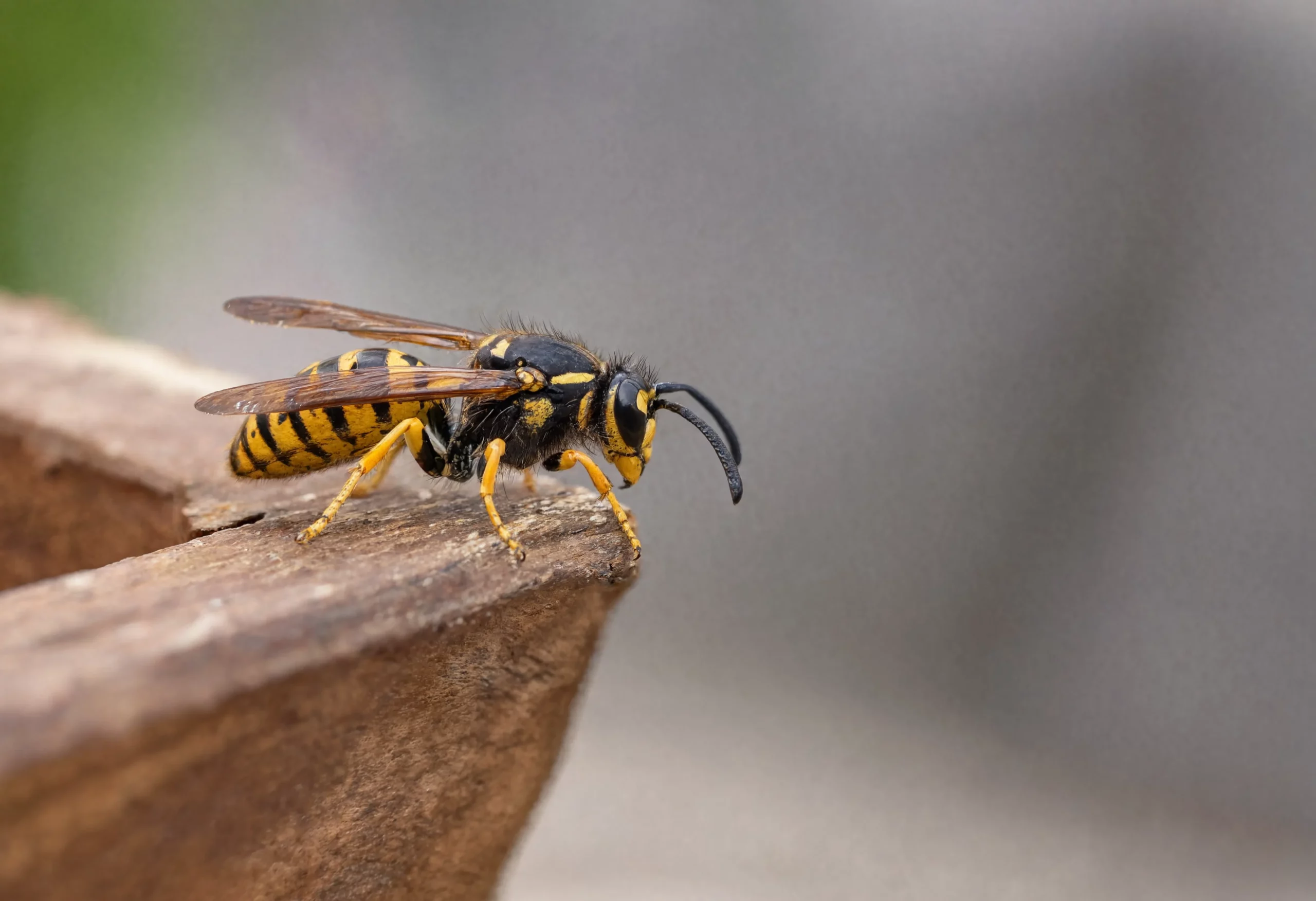
Bee and Stinging Insect Identification
Correct identification matters before treatment because wasps, yellow jackets, hornets, and bees can differ significantly in nesting behavior, aggressiveness, and control needs.
Seeing a single insect does not always mean there is a nest attached to the structure. Repeated traffic to and from the same location is much more significant. Those travel patterns often provide useful clues during a professional inspection.
Wasp Control in Alaska: What Professional Treatment Includes
We determine whether the activity involves wasps, yellow jackets, bees, or another insect before choosing a treatment approach.
We look for repeated flight paths, nesting sites, entry points, and property conditions that may be supporting the infestation.
Treatment is directed toward the source of activity instead of relying only on contact sprays against individual insects.
Our residential pest control services can address stinging insects along with other pest problems around the home.
We identify practical ways to reduce nesting opportunities, exterior access points, and conditions that attract foraging insects.
Where Wasps, Yellow Jackets, and Bees Commonly Nest
Stinging insects often choose areas that provide shelter from weather, predators, and disturbance. Some nests are clearly visible, while others remain almost completely concealed except for insects entering and leaving a small opening.
Around Homes and Buildings
- Roof eaves and soffits
- Deck framing and porch overhangs
- Sheds, garages, and detached structures
- Gaps around siding and fascia
- Exterior vents and utility penetrations
- Wall and ceiling voids
- Attic spaces and roof cavities
Around the Property
- Ground openings and abandoned burrows
- Dense shrubs and protected vegetation
- Woodpiles and stored materials
- Outdoor furniture and equipment
- Garbage and recycling areas
- Locations with frequent food or drink spills
- Protected cavities around landscaping features
Wasps, bees, and yellow jackets are only part of Alaska’s seasonal insect activity. If several species are causing problems at the same property, our professional insect control services cover a broader range of crawling and flying pests.
Professional Wasp Removal and Nest Treatment Process
The safest and most effective method depends heavily on the species, nest location, accessibility, and activity level. Treating an exposed nest beneath a low overhang is not the same job as dealing with insects entering a structural cavity several feet above the ground.
Inspect the Activity
We observe where insects are concentrating, follow travel patterns, and inspect likely nesting sites around the structure and surrounding property.
Identify the Stinging Insect
Wasps, yellow jackets, hornets, and bees do not all behave the same way. Correct identification helps determine the appropriate control strategy.
Wasp Control in Alaska for Active Nests
Once the source is identified, treatment can be directed toward the active nest or nesting zone rather than unrelated areas of the property.
Address Remaining Nest Activity
Where appropriate and safely accessible, nest material may be removed after treatment. Concealed nests can require a different approach because opening structural cavities is not always necessary or advisable.
Reduce Future Nesting Risk
We identify exterior gaps, attractants, recurring nesting locations, and other conditions worth correcting once active insects are controlled.
When Professional Stinging Insect Control Makes Sense
A few insects foraging outdoors do not automatically require treatment. The situation changes when there is an established colony near people, repeated activity entering a structure, or defensive behavior around an area that residents, employees, customers, or pets use regularly.
Signs a Nest May Be Nearby
- Insects repeatedly enter and leave the same opening
- Activity concentrates around one eave, vent, wall gap, or ground opening
- More insects appear as the day becomes warmer
- Wasps or yellow jackets become defensive near a particular area
- Buzzing is noticeable inside a wall, ceiling, or roof cavity
- Activity consistently returns after individual insects are sprayed
Situations Where DIY Removal Is Riskier
- Nests located high above the ground
- Activity near doors, stairs, decks, or children’s play areas
- Nests hidden inside structural cavities
- Large numbers of defensive yellow jackets or wasps
- Ground nests near walkways or landscaped areas
- Anyone nearby has a known serious sting allergy
The CDC notes that bee, wasp, and hornet stings can range from mild discomfort to severe allergic reactions. Additional information about avoidance and sting response is available through the CDC guidance for stinging insects.
Wasp and Bee Nest Removal Cost Factors
There is no single price that accurately covers every stinging insect problem. A small, easily accessible exposed nest and a concealed colony high inside a structure involve very different amounts of labor, access, equipment, and treatment time.
Species
Bee control, yellow jacket treatment, and other wasp control situations may require different methods depending on insect behavior and nesting habits.
Nest Location
Open eaves, wall voids, attics, underground nests, sheds, and high rooflines can require different application strategies.
Accessibility
Height, landscaping, steep surfaces, structural obstacles, and restricted work areas can affect the complexity of service.
Activity Level
Light early-season activity can require a different approach than a mature colony with frequent defensive traffic.
For a broader look at factors that can influence professional treatment pricing, see our guide to pest control costs for Alaska homes. An inspection is still the best way to determine what a specific stinging insect problem requires.
Why DIY Wasp Sprays Often Miss the Nest
Contact sprays can kill an individual wasp or yellow jacket, but that does not necessarily affect an established colony somewhere else on the property. When a protected nest is producing many workers, treating individual foragers only addresses the most visible symptom.
Access creates another problem. Spraying into an exterior opening without knowing where the nest sits can disturb the colony without fully controlling it. Activity inside siding, soffits, attic spaces, or wall cavities may also require specialized application methods to reach the source.
The better approach is to determine what insect is present, where the activity originates, and what treatment method fits that particular nesting site.
Do Wasp Repellents Actually Work?
Repellents may discourage occasional activity in a limited area, but they do not reliably eliminate an established colony. Homemade sprays, strong scents, hanging decoys, and similar approaches can produce inconsistent results because nesting decisions depend on shelter, species behavior, food availability, access, and seasonal conditions.
If an active nest is already established, nest-focused treatment matters much more than trying to make an entire property unattractive to every flying insect.
Bee Control and Identification
Bee activity deserves proper identification rather than being lumped together with every yellow and black flying insect. Pied Piper Pest Control provides bee control when bees establish a problematic nest or colony around structures or areas where people regularly spend time.
Identification still comes first. Bees, wasps, and yellow jackets have different nesting habits and behavioral patterns, so treatment should reflect what is actually present rather than relying on appearance alone.
When Bee Control May Be Needed
- Bees repeatedly enter a structural opening
- A colony is established close to doors or walkways
- Activity creates a concern around children, pets, customers, or employees
- Bees are nesting inside a wall, roof cavity, or another difficult location
- The species or nesting site cannot be confidently identified
When Identification Comes First
Bees visiting flowering plants are behaving very differently from a colony repeatedly entering part of a building. We look at flight patterns, nesting location, body shape, activity level, and other clues before deciding what action makes sense.
Preventing Wasps, Yellow Jackets, and Other Stinging Insects
You cannot prevent every flying insect from entering a property, but you can make structures less attractive for nesting and reduce food sources that draw social wasps into busy areas.
Reduce Nesting Opportunities
- Seal accessible gaps around siding, fascia, vents, and exterior penetrations after active nests are resolved
- Inspect sheds, decks, railings, and roof overhangs during warmer months
- Repair damaged screens and exterior openings
- Keep stored materials organized so protected cavities are easier to inspect
- Watch recurring nesting locations from previous seasons
Reduce Food and Attractants
- Keep outdoor garbage containers closed
- Clean food and drink spills around patios and decks
- Do not leave sugary beverages exposed outdoors
- Rinse recycling containers when residue accumulates
- Remove fallen or overripe fruit where practical
Preventive work is particularly useful around restaurants, warehouses, apartment properties, hospitality facilities, and other sites where outdoor food, waste, or frequent pedestrian traffic can increase exposure. Our commercial pest control programs can incorporate recurring inspections when seasonal stinging insect activity is a repeated concern.
Seasonal Wasp and Yellow Jacket Activity in Alaska
Stinging insect activity changes as colonies develop through the warmer months. Understanding the general progression can help property owners recognize a developing nest before activity reaches its peak.
| Seasonal Stage | What You May Notice | What It Can Mean |
|---|---|---|
| Early Activity | Occasional wasps or bees inspecting eaves, sheds, deck framing, and other sheltered areas | A queen may be searching for or establishing a nesting location |
| Growing Colony | More frequent travel to and from one specific location | Workers may be feeding the colony and expanding an established nest |
| Heavy Activity | Constant traffic, defensive behavior, and increased activity around outdoor food | The colony may be mature, larger, and more defensive around the nesting site |
| Cold-Weather Decline | Outdoor activity decreases significantly as temperatures fall | Many seasonal colonies begin declining as colder Alaska conditions arrive |
A nesting area that seems minor early in the season can become substantially more active later. Finding the source early can also make professional stinging insect control more straightforward before the colony reaches peak activity.
Is It a Wasp, Yellow Jacket, Hornet, or Bee?
Homeowners often use these names interchangeably, but correct identification matters. Nest location, aggression, colony structure, foraging behavior, and control methods can vary significantly among different stinging insects.
Wasps and Yellow Jackets
Yellow jackets are social wasps and are often responsible for the aggressive activity people associate with outdoor nests. Depending on the species, nests may occur underground, inside structural cavities, or in other protected areas.
Bees and Other Pollinators
Bees can resemble wasps from a distance, but their behavior and nesting habits can be different. Proper identification helps determine whether bee control is necessary and what treatment approach is appropriate.
If yellow jackets are the main concern, our guide to preventing wasp and yellow jacket problems covers additional ways to reduce seasonal nesting and activity.
Frequently Asked Questions
How do I know if I have a wasp or yellow jacket nest nearby?
Watch for repeated traffic to the same location. Wasps or yellow jackets consistently entering a siding gap, roofline, ground opening, shed, deck cavity, or other protected spot are a stronger indication of a nearby nest than seeing an occasional insect flying through the yard.
Does Pied Piper Pest Control provide bee control?
Yes. Pied Piper Pest Control provides bee control when bees establish problematic nesting activity around homes, businesses, structures, or other areas where the colony creates a concern.
Can I remove a wasp nest myself?
Small inactive nests may be simple to remove, but active nests can be dangerous. Professional help is a better choice when the nest is high, concealed, difficult to access, heavily active, or located near people who may be vulnerable to stings.
How much does professional wasp or bee removal cost?
Cost varies with species, nest location, accessibility, activity level, number of active sites, and the equipment or treatment method needed. An exposed nest within easy reach is generally less complicated than activity hidden inside a wall or high roofline.
Do wasps come back after a nest is removed?
An eliminated colony does not simply restart, but new queens can establish new nests in attractive locations during future seasons. Sealing accessible openings and monitoring previous nesting areas can reduce repeat problems.
Where do yellow jackets usually build nests?
Yellow jackets may nest underground, inside structural cavities, beneath protected surfaces, or in other sheltered areas. Repeated traffic into a single opening is often the easiest clue that a nest is nearby.
What should I do if wasps or bees are entering a wall?
Avoid sealing the entrance while the colony is still active. Blocking an exterior opening before treatment can force insects to search for another exit. Have the activity inspected first so the species, nest location, and appropriate treatment can be evaluated.
Are stinging insect treatments safe around children and pets?
Treatment depends on the insect, nest location, and products required. Applications should follow product label directions, and your technician can explain precautions or re-entry instructions that apply to the specific service.
Can wasps damage a house?
Wasps generally do not consume structural wood the way wood-destroying insects do, but concealed nesting activity can create other problems, especially when insects enter wall voids or occupied areas. The primary concern is usually stinging risk and repeated activity rather than structural feeding damage.
Schedule Professional Wasp, Bee, and Yellow Jacket Control
If wasps, bees, or yellow jackets are repeatedly entering the same area, guarding an active nest, or making part of your property difficult to use safely, Pied Piper Pest Control can inspect the activity and recommend the appropriate treatment. In the Mat-Su Valley, our Wasilla pest control team handles seasonal stinging insect problems around homes, decks, sheds, businesses, and outdoor gathering areas. Nearby, our Palmer pest control team provides the same inspection-first approach for nests around residences, commercial properties, barns, and outbuildings.
You can also explore our complete pest control services when stinging insects are not the only pest causing problems around the property.