
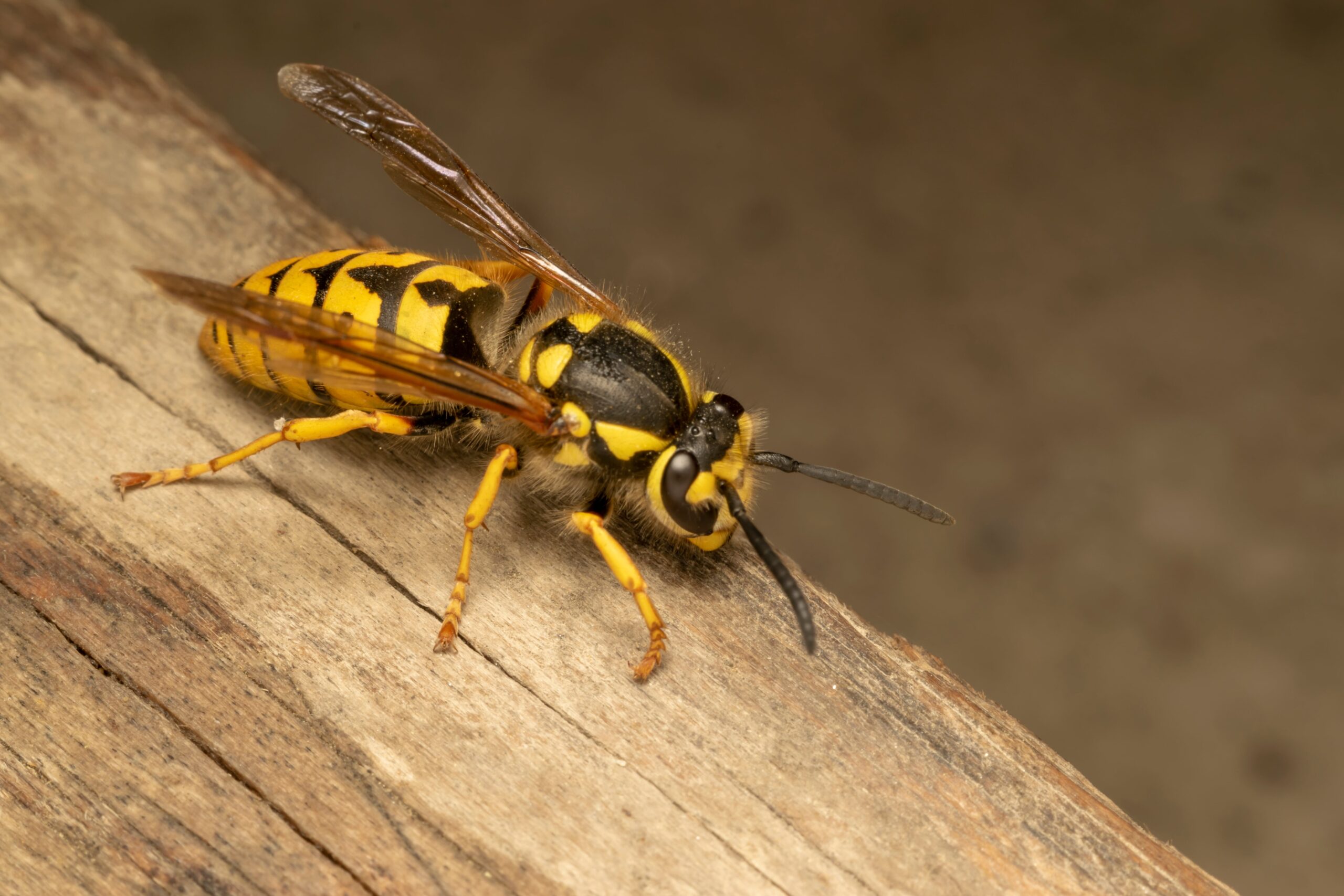
Wasp vs. Hornet: Which Stinging Insect Is More Dangerous Around Your Home?
October 2, 2026 7:02 pmIf a stinging insect is circling your deck, the first question is usually which one you are dealing with. The hornet vs wasp debate comes up every summer in Alaska, and the honest answer surprises most homeowners: the insects causing trouble here are almost always yellowjackets and paper wasps, and the so-called “hornet” you spotted may really be a yellowjacket in disguise.
That matters because the two groups behave differently, nest in different places, and call for different precautions. A paper wasp nest tucked under a shed eave is a very different situation from a yellowjacket colony hidden inside a wall void or an old rodent burrow beside the driveway.
The sections below break down how hornets and wasps differ, which ones actually live in Alaska, how to recognize their nests, and what to do when a colony sets up too close to your family. If you already know a nest is the problem, the team at Pied Piper Pest Control can take it from there.
The short answer: all hornets are wasps, but not all wasps are hornets. True hornets belong to the genus Vespa and are larger than most wasps. In Alaska, the stinging insects that homeowners call hornets are usually bald-faced hornets, which are technically a type of yellowjacket.
Hornet vs Wasp: What Is the Real Difference?
“Wasp” is the broad label for thousands of species, from tiny parasitic wasps that help gardens to the social wasps that build paper nests and defend them. Hornets are one small branch of that family. Every hornet is a wasp, but only a handful of wasps are hornets, which is why the names get tangled so easily.
How Hornets Fit Inside the Wasp Family
Entomologists reserve the word “hornet” for members of the genus Vespa, such as the European hornet. These are large, robust social wasps that build enclosed paper nests. The European hornet is an eastern species, and USDA APHIS notes it is not found west of the Rocky Mountains, so it is not part of the Alaska picture.
The insects you are far more likely to meet are yellowjackets, which come in two groups. Ground-nesting species build below the surface, while aerial species hang their nests from branches, eaves, and structures. The bald-faced hornet, with its black and white face, belongs to the aerial group, and that is why a “hornet” in Alaska is really a yellowjacket relative.
Hornet vs Wasp Size and Appearance
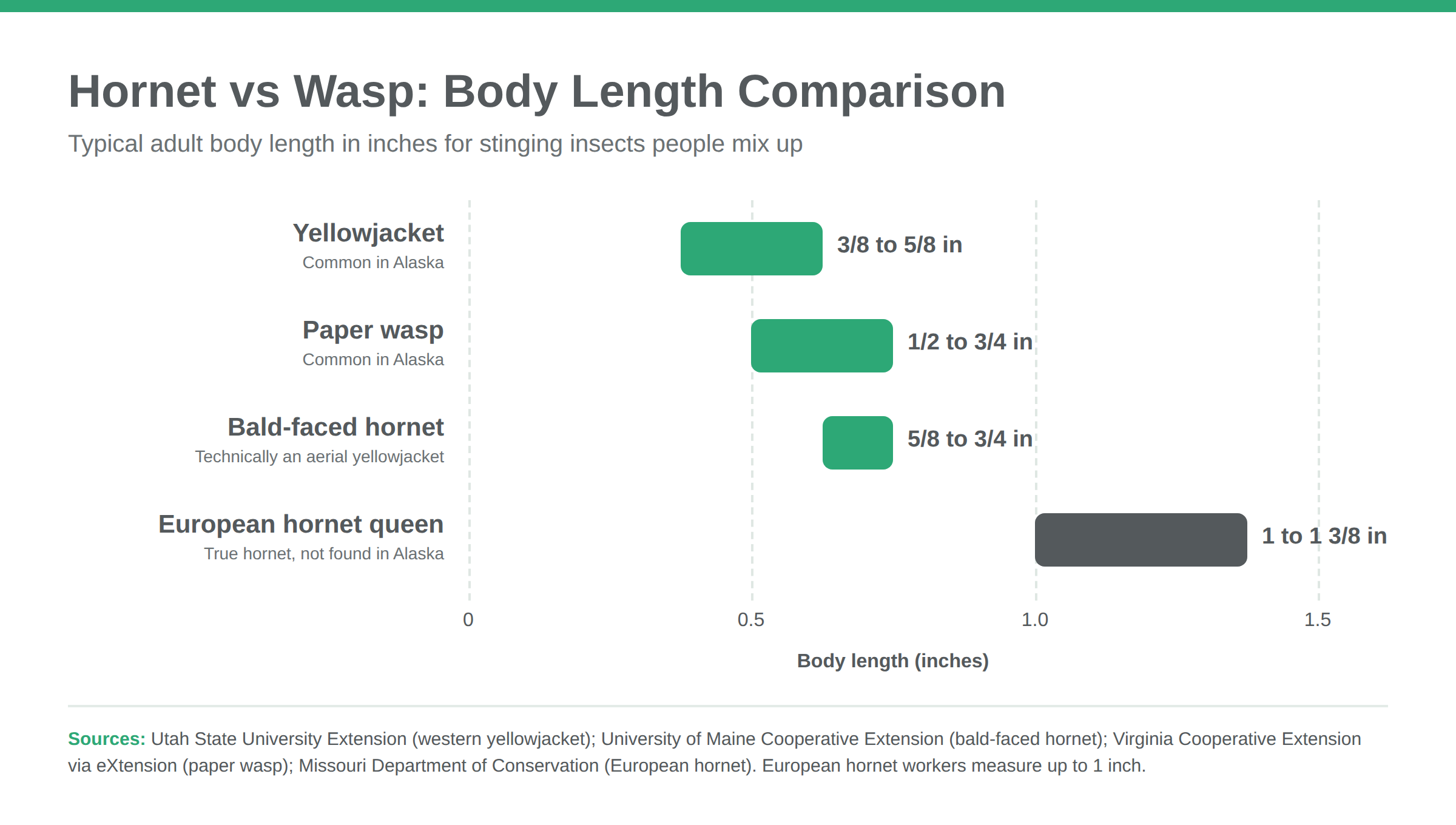
Size is the quickest visual clue, though it is not perfect. Yellowjackets are compact and stout, paper wasps are slimmer with dangling legs, and true hornets are noticeably bulkier. The chart below shows typical body lengths drawn from university extension and state conservation sources.
Color helps too. Yellowjackets and paper wasps wear yellow and black or reddish-brown markings, while the bald-faced hornet is black with white on the face and tail end. Wasps of every type have smooth, hairless bodies, which separates them from fuzzy bumble bees.
Wasps and Hornets Found in Alaska
Alaska is home to more social wasps than most visitors expect. According to the University of Alaska Fairbanks Cooperative Extension Service, 11 species of yellowjackets have been reported in the state, and the group as a whole is considered beneficial because workers hunt flies, aphids, and caterpillars.
Yellowjackets
Yellowjackets cause most of the stinging complaints here. They are small, aggressive when a nest is disturbed, and drawn to sweet drinks, meat, and open trash. Many species nest underground or inside structural voids, so the first warning is often a stream of workers flying in and out of a small gap.
Bald-Faced Hornets
The bald-faced hornet is the closest thing Alaska has to a hornet. It builds a large, gray, enclosed nest that hangs from trees, eaves, or the sides of buildings. It defends that nest fiercely, but it is generally less of a nuisance around picnic tables than ground-nesting yellowjackets.
Paper Wasps
Paper wasps build the open, umbrella-shaped combs you can see from a distance. They are slimmer, slower, and usually less aggressive, though they will sting if their nest is bumped. Their colonies stay small, so the risk comes mostly from nests placed beside doorways, railings, and grills.
- Yellowjackets: compact, yellow and black, often nesting underground or in wall voids
- Bald-faced hornets: black and white, building large enclosed aerial nests
- Paper wasps: slender with long legs, building open, umbrella-shaped nests
Whichever species is nesting nearby, the right response starts with correct identification, and that is part of every visit within our full range of pest control services in Alaska.
Hornet vs Wasp Nests: How to Tell Them Apart
Nest shape is often a better identifier than the insect itself, since you can study a nest from a safe distance. Never get close enough to provoke the colony while you look.
What Each Nest Looks Like
| Insect | Nest Appearance | Typical Location |
|---|---|---|
| Paper wasp | Open, umbrella-shaped comb with visible cells | Eaves, railings, porch ceilings, outdoor furniture |
| Bald-faced hornet | Large gray paper ball or football shape with one entrance at the bottom | Tree branches, eaves, sheds, building walls |
| Yellowjacket | Enclosed paper nest, often not visible at all | Old rodent burrows, wall voids, crawl spaces, attic insulation |
Paper wasp nests are the easiest to spot early because the cells stay exposed. Enclosed nests are trickier. Yellowjacket colonies hidden in the ground or inside a wall are the ones that catch people off guard, whether during mowing, yard work, or a renovation.
How Big Do Nests Get?
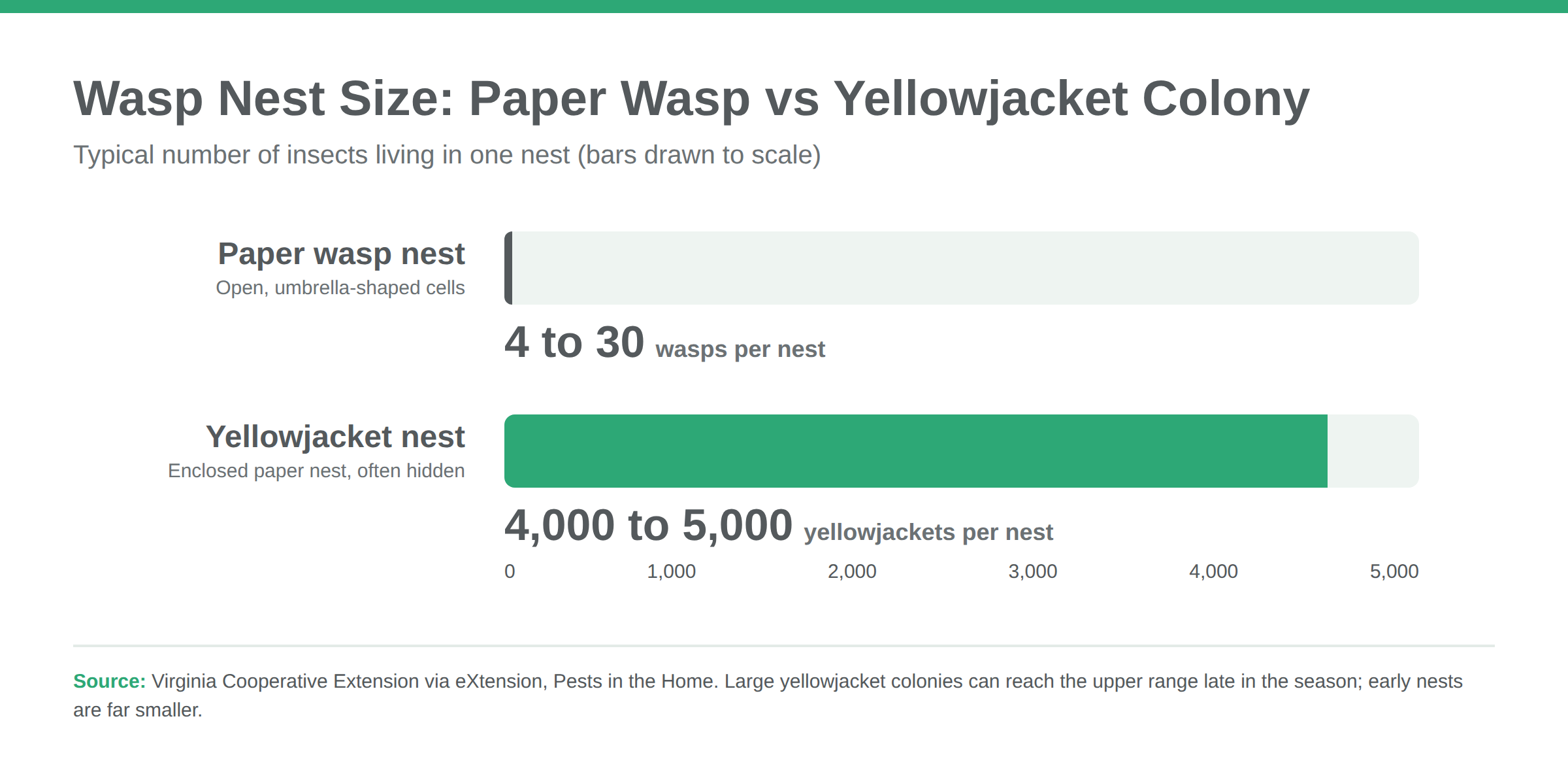
Colony size explains why timing matters. A small paper wasp nest holds a few dozen insects at most, while a mature yellowjacket nest can hold thousands.
Colonies start tiny each spring. A single queen builds the first cells and raises the first workers alone, and once those workers emerge they take over foraging and nest building. That early window is when a nest is easiest to deal with and least dangerous.
Hornet vs Wasp Stings: Which Is More Dangerous?
On paper, true hornets have the more intimidating reputation, but the practical risk in Alaska comes from yellowjackets and bald-faced hornets. Both defend their nests aggressively, and both can sting repeatedly because their stingers do not stay lodged in skin the way a honey bee’s does.
Aggression Around the Nest
Most stings happen when someone disturbs a nest without knowing it is there. A disturbed colony releases alarm signals that recruit nestmates, so one accidental bump can turn into many stings within seconds. Late summer is the peak risk, when colonies are at full strength and natural food supplies start to thin out. Restaurants, lodges, and worksites with outdoor seating feel this most, which is where commercial stinging insect protection earns its keep.
Allergic Reactions and Medical Risk
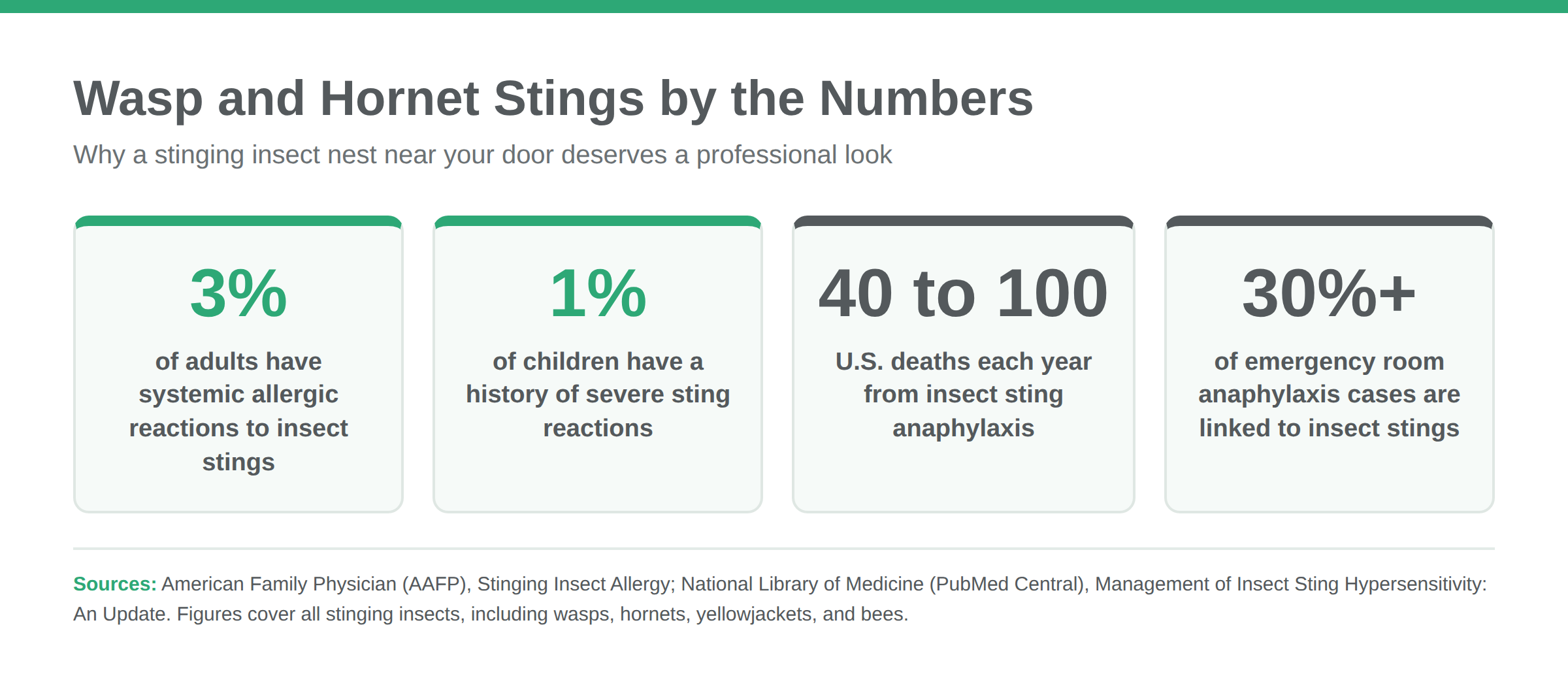
For most people a sting means pain, redness, and swelling. For a smaller group it means something far more serious. American Family Physician reports that systemic allergic reactions occur in roughly 3 percent of adults and about 1 percent of children, and these reactions can appear even in people with no earlier history of allergies.
Seek emergency care right away if a sting is followed by trouble breathing, swelling of the face or throat, dizziness, or hives spreading beyond the sting site. Anyone who has had a serious reaction before should talk with an allergist about long-term protection.
Why Stinging Insects Surge in Alaska’s Short Summer
Alaska’s compressed warm season makes colonies feel like they appear overnight. Queens emerge during the first warm stretch of spring, and a mild transition from late spring into summer lets more of them survive. By midsummer a nest that began as a handful of cells can hold a crowd of workers.
The 2026 season showed how noticeable this can be. Pest professionals across Southcentral Alaska reported heavy demand, while a University of Alaska Fairbanks entomologist told Alaska Public Media that there was no evidence the overall population had grown. Either way, homeowners who found nests in sheds, eaves, and yards did not need a statistic to tell them it was a busy year.
The good news is that colonies do not last. Workers and the old queen die off in fall, and only newly mated queens overwinter in sheltered spots like attics, woodpiles, and wall cavities. That is why a quick spring check of those areas pays off, and it is a natural fit for residential pest protection for Alaska homes that start before colonies take hold.
How to Prevent Wasp and Hornet Nests Around Your Home
Prevention is simple, cheap, and effective when you start before the first warm days. Two habits do most of the work: remove what attracts foragers, and close off the places queens like to nest.
- Seal trash and food waste: use tight lids and clean up sweet drinks and meat scraps right away
- Close entry points: caulk gaps in siding, soffits, window frames, and utility penetrations
- Repair screens: keep window, door, and vent screens intact and tight-fitting
- Fix moisture sources: repair leaky faucets and clear standing water that draws thirsty insects
- Check early: inspect eaves, sheds, and crawl spaces in spring before colonies grow
- Fill old burrows: collapse abandoned rodent burrows near the house, but never plug an active nest entrance
A sealed, clean property will not stop every queen, but it gives them far fewer places to settle. Pairing those habits with year-round insect prevention keeps the whole property less appealing to stinging pests and the other insects that move in with them.
When to Call a Professional for Nest Removal
A small, easy-to-reach nest in an unused corner might not need action at all. A nest above a door your family uses daily, inside a wall, or in the ground near a play area is a different matter. Treating a full-strength colony with store-bought spray often provokes defensive swarming, and wall void nests can sit near electrical wiring, which adds another hazard.
Professionals treat nests with protective gear, the right products, and the right timing, usually when most of the colony is inside and calm. If you are weighing your options, learn more about professional wasp nest removal and what a visit involves.
Frequently Asked Questions About Hornets and Wasps
Is a hornet or a wasp more dangerous?
True hornets are larger and can deliver a more painful sting, but both hornets and wasps sting repeatedly and defend their nests. In Alaska, yellowjackets and bald-faced hornets create the most risk because their nests are often near homes. The danger depends on nest location and your sting sensitivity more than on the name.
Are there hornets in Alaska?
Alaska has no established true hornets. The bald-faced hornet lives here, but it is technically an aerial yellowjacket. Most stinging insect problems come from ground-nesting yellowjackets and paper wasps.
Is a yellowjacket a wasp or a hornet?
A yellowjacket is a wasp. It belongs to the same family as hornets, but it is smaller and has different nesting habits. The black and white bald-faced hornet is also a type of yellowjacket.
Do wasps and hornets sting more than once?
Yes. Unlike honey bees, wasps, hornets, and yellowjackets can sting repeatedly because their stingers do not get stuck in skin. A disturbed nest can produce many stings in a short time.
When is wasp season in Alaska?
Queens emerge in the first warm days of spring and start small nests. Colonies grow through summer and reach peak size in late summer, then die off after fall frosts while new queens overwinter.
Can I remove a wasp or hornet nest myself?
Small nests are sometimes manageable, but it is risky. Disturbing a full colony can trigger mass stinging, and nests inside walls are hard to reach safely. Having a trained technician handle it protects your family and pets.
What attracts wasps and hornets to my yard?
Open trash, sweet drinks, pet food, meat scraps, standing water, and sheltered gaps in siding or soffits all draw them in. Removing those attractants and sealing entry points lowers your risk.
Keep Your Alaska Home Safe From Stinging Insects
You do not need to wipe out every wasp in your yard. They are useful predators and pollinators, and most encounters need no response at all. The goal is to deal with nests that sit where people live, walk, and play.
If you are unsure what is nesting on your property, or you already know a colony is too close for comfort, request a stinging insect inspection and get a clear plan before the problem grows.
Categorised in: Insect Control
This post was written by Pied Piper Team