
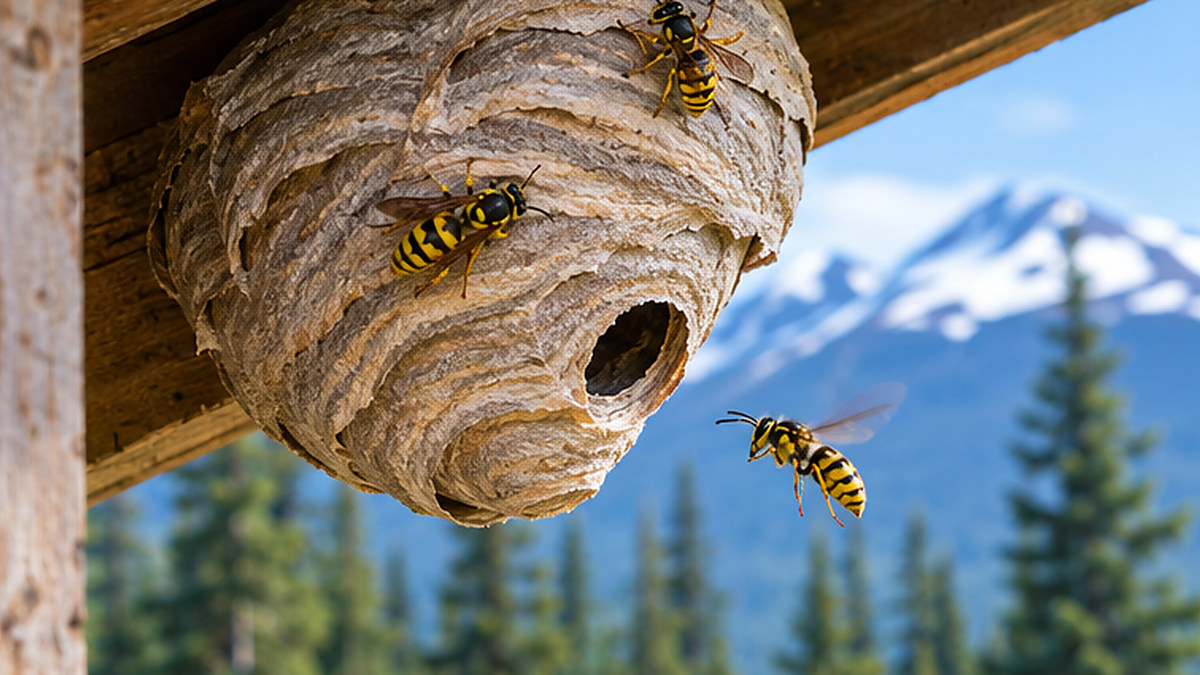
What Do Yellow Jackets Hate? Repellents That Actually Work
July 1, 2024 7:10 pmIf a summer cookout has ever ended early because of striped wasps circling the grill, you have probably wondered what do yellow jackets hate and whether anything keeps them away for good. Yellow jackets dislike strong minty and citrus scents, covered food and sealed trash, and any gap too tight to squeeze through. Scents help only a little, though. The steps that actually protect a family are removing what draws wasps in, sealing nesting spots and trapping at the right time of year. Pied Piper’s Alaska pest specialists walk through each step here, along with findings from Alaska field research, so you can enjoy a short northern summer without swatting.
Yellow jackets avoid:
- Strong mint, clove, lemongrass and eucalyptus scents
- Sealed trash cans, covered drinks and clean pet bowls
- Screens, caulk and weatherstripping that close off entry points
- Traps hung away from seating at the right time of season
What Do Yellow Jackets Hate the Most?
Yellow jackets find food by smell, and they remember where they found it. Once workers locate a meal, they keep returning to that spot long after the food is gone. That habit is why the most effective deterrents change what the wasps smell and find, instead of relying on one strong odor to scare them off.
What Do Yellow Jackets Hate About Essential Oils?
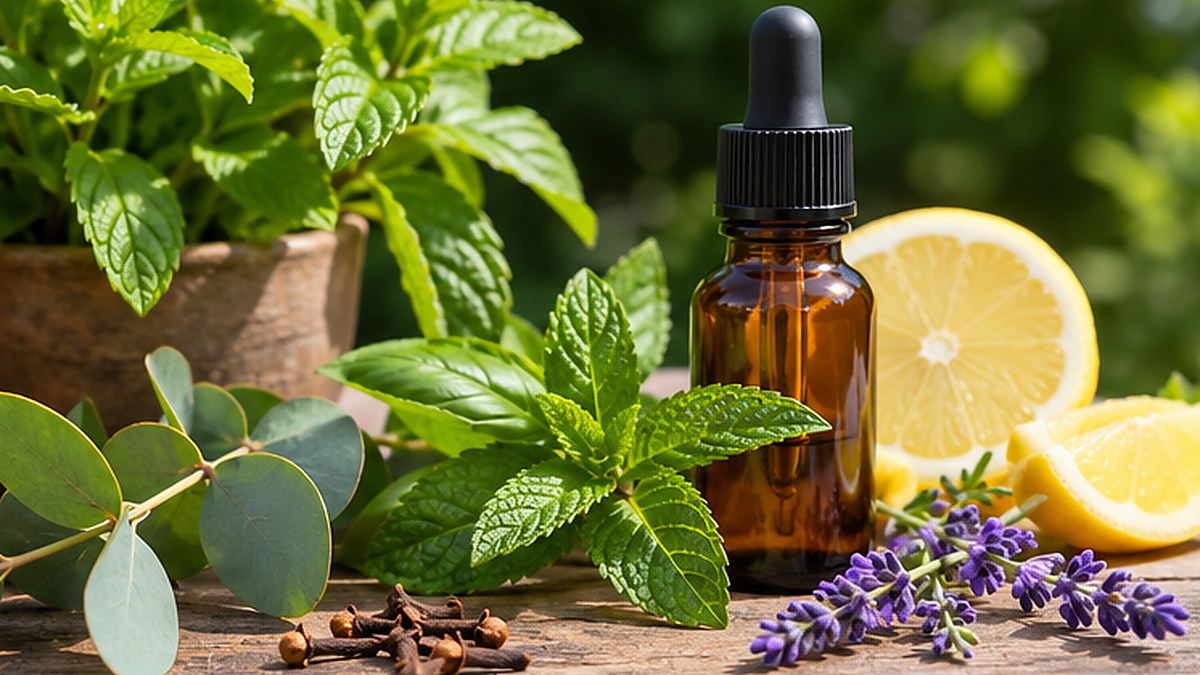 Strong plant oils overwhelm the food odors that guide foraging workers. Peppermint, clove, lemongrass and eucalyptus are the oils used most often, and citronella, lavender and tea tree appear in many blends. Because oils evaporate quickly, they work best as a short-term shield around a patio, deck or picnic table.
- Peppermint oil: Mix a few drops with water in a spray bottle and mist table legs, railings and door frames.
- Clove oil: Dilute it the same way and spray around trash cans and entry points. The spicy odor is strong and lingers.
- Lemongrass oil: Use it in an outdoor diffuser or candle, or dilute it for a spray.
- Eucalyptus oil: Dilute it and spray outdoor surfaces, never skin.
Reapply after rain and every few days. Keep oils away from skin, food and pets, because tea tree, eucalyptus and peppermint can harm cats and dogs. Research on home-made repellents is limited, so treat oils as one layer of protection rather than the whole plan.
Herbs and Plants Yellow Jackets Avoid
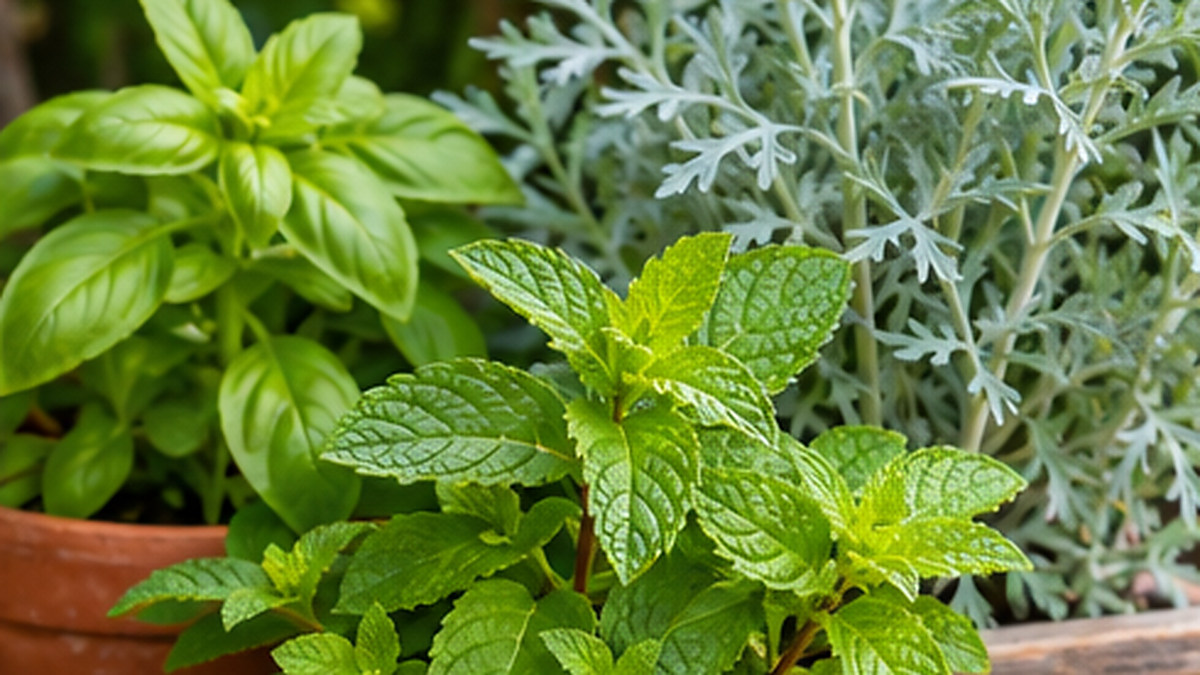 A living border around outdoor seating releases scent all season without reapplying. Choose cold-hardy, strongly scented plants that suit Alaska gardens.
- Spearmint and peppermint: Both are hardy. Plant them in pots, because mint spreads fast.
- Wormwood: Its bitter, silvery foliage handles cold well and gives off a sharp scent.
- Basil: It needs warmth, so grow it in a pot on a sunny deck.
- Cucumber peels: Some gardeners scatter them near seating. The evidence is anecdotal.
Scents That Draw Yellow Jackets In
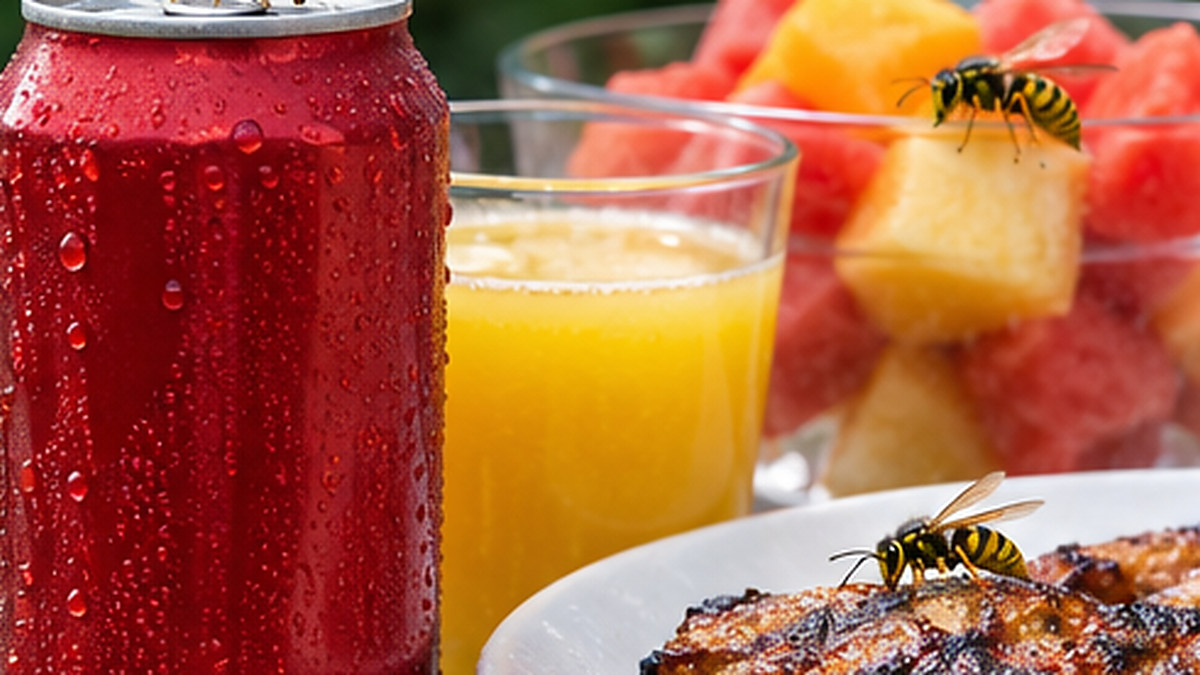 Avoiding attractants matters as much as using repellents. Yellow jackets scavenge both sweet and protein-rich foods, and Alaska summers hand them plenty of both.
- Soda, juice, beer and ripe fruit left uncovered
- Grilled meat, salmon, fish scraps and pet food
- Perfume, scented lotion and sweet-smelling sunscreen
- Open compost bins and trash cans without tight lids
Do Natural Yellow Jacket Repellents Actually Work?
Some methods have solid backing and others rest mostly on tradition. This comparison shows where to spend your effort first.
| Method | How it works | How well it works | Best use |
|---|---|---|---|
| Sealed food, trash and pet bowls | Removes the reason wasps visit | Strong. Wasps keep returning to a known food source, so cutting it off breaks the habit | Every day, all season |
| Screens, caulk and weatherstripping | Blocks entry into walls, vents and sheds | Strong for indoor problems, no effect in an open yard | Spring, before queens nest |
| Baited traps | Draws foraging wasps away from people | Moderate. Reduces foragers but does not eliminate a colony | Spring queen traps and late-summer foragers |
| Essential oil sprays | Masks food odors | Limited research and short lasting | Around a table or patio, reapplied often |
| Mint, wormwood and basil | Release scent through the season | Limited research | Borders around seating |
| Fake nests | Meant to suggest an occupied territory | Little research for yellow jackets | Optional extra at best |
How Yellow Jackets Behave in Alaska
Yellow jackets live in annual colonies. A mated queen survives the winter, then builds a small paper nest in spring from chewed wood fiber and raises the first workers. Those workers take over foraging and nest building while the queen keeps laying eggs. Colonies grow all summer, and in late summer they switch to producing new queens and males. The first hard frost ends the workers’ season. Only mated queens survive winter, and no colony reuses an old nest.
Alaska is home to 11 yellow jacket species. Most are helpful predators of flies, aphids and caterpillars, and University of Alaska Fairbanks Cooperative Extension lists them among the state’s beneficial arthropods. The trouble comes from scavenging species that move in on food, drinks and trash once their colonies peak.
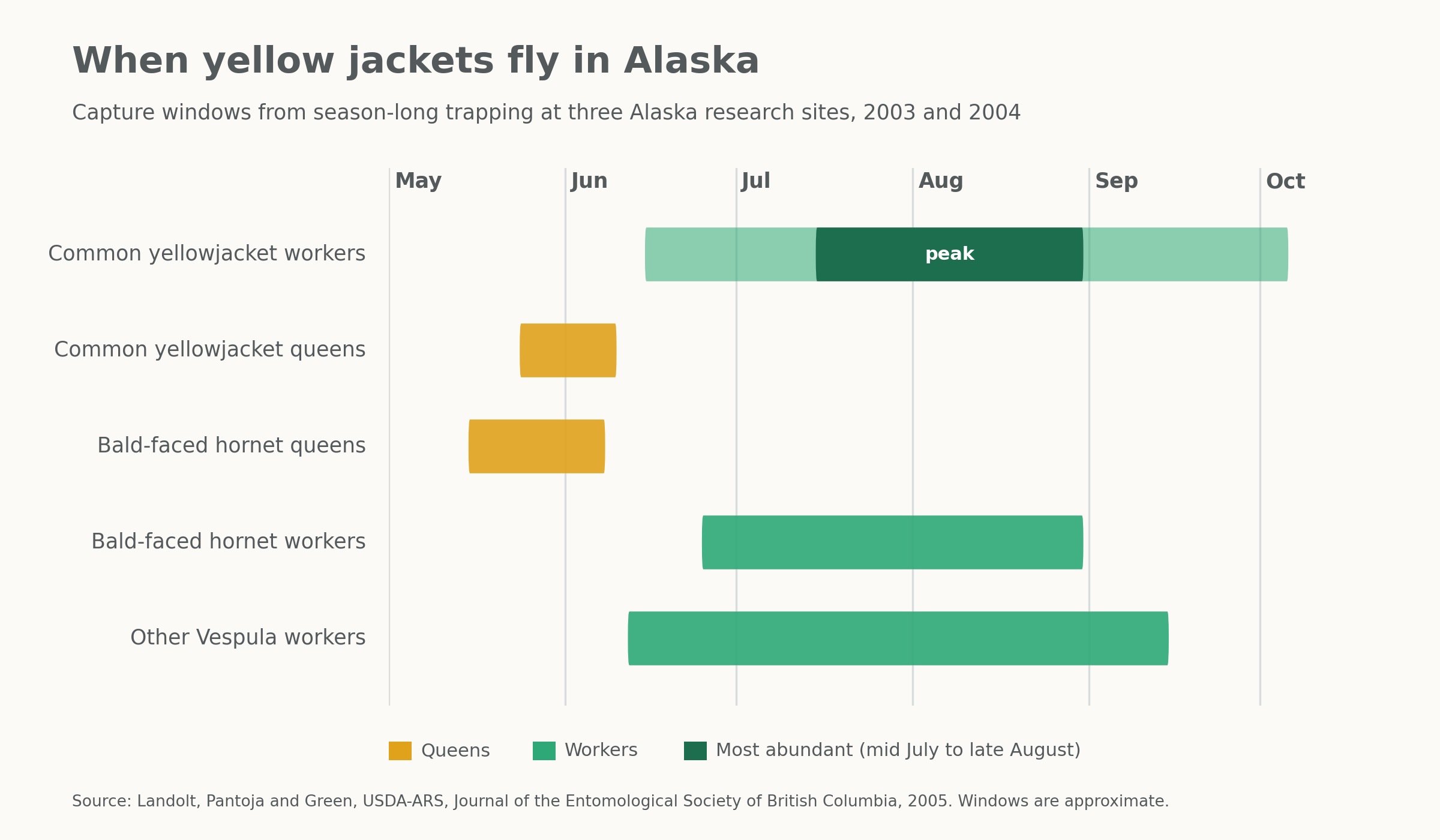
USDA researchers who trapped wasps at three Alaska sites found that the common yellowjacket, the scavenger most likely to crash a picnic, flew from mid June to early October and was most abundant from mid July to late August. Queens appeared in late May and early June.
Signs of a Yellow Jacket Nest
University of California Agriculture and Natural Resources notes that wasps flying in and out of a hole in the ground or a building opening point to a nest. Watch for these signs:
- Steady traffic to a single hole in the ground, wall void or tree cavity
- A gray, papery nest made from chewed wood fiber
- Guard wasps hovering near the entrance
- A sudden swarm when you mow or trim near one spot
If you spot any of these, mark the area from a distance and keep children and pets away.
Traps, Barriers and Other Tactics Yellow Jackets Can’t Stand
Physical Barriers
Barriers cost little and work every day, which makes them the best starting point.
- Cover compost bins, pet bowls and trash cans with tight lids or fine mesh.
- Caulk gaps in siding, soffits and foundation cracks, and use weatherstripping on doors and windows.
- Reduce oversized vent openings with screening that still lets air through.
- Keep windows and doors closed or screened, and cover drinks and food outdoors.
Traps
Timing decides whether a trap helps. Queens search for nest sites in late May and early June in Alaska, so spring traps can catch a queen before a colony exists. Later in the season, traps pull foraging workers away from people.
The bait matters too. Researchers trapping wasps at three Alaska sites measured how many workers each bait attracted:
| Bait | Common yellowjacket | Bald-faced hornet |
|---|---|---|
| Acetic acid plus isobutanol | 140.2 | 33.9 |
| Heptyl butyrate | 0.5 | 0.3 |
Many store-bought lure traps use heptyl butyrate. In the Alaska trials it drew almost no common yellowjackets, although it did attract several other yellowjacket species. If a trap hangs empty, switch baits. Use juice or sugar water in early summer and meat or fish scraps in late summer.
A simple home-made trap takes five minutes:
- Cut the top third off a 2-liter soda bottle.
- Flip the top and set it inside the base like a funnel, then tape the seam.
- Add an inch of water, a few drops of dish soap and your bait.
- Hang the trap on a branch or fence at roughly chest height, at least 20 feet from where people sit or eat.
- Check it every few days, replace the bait weekly and seal dead wasps in a bag before throwing them out.
Traps reduce the number of foraging wasps, but they do not wipe out a colony, and open food nearby weakens them.
Decoy Nests
Decoy nests are often sold on the idea that wasps avoid territory that looks occupied. There is little research showing this works for yellow jackets, and species that nest underground never see a hanging decoy. A paper-bag decoy costs nothing, but it should never replace covered food and sealed entry points.
How to Keep Yellow Jackets Away Before They Nest
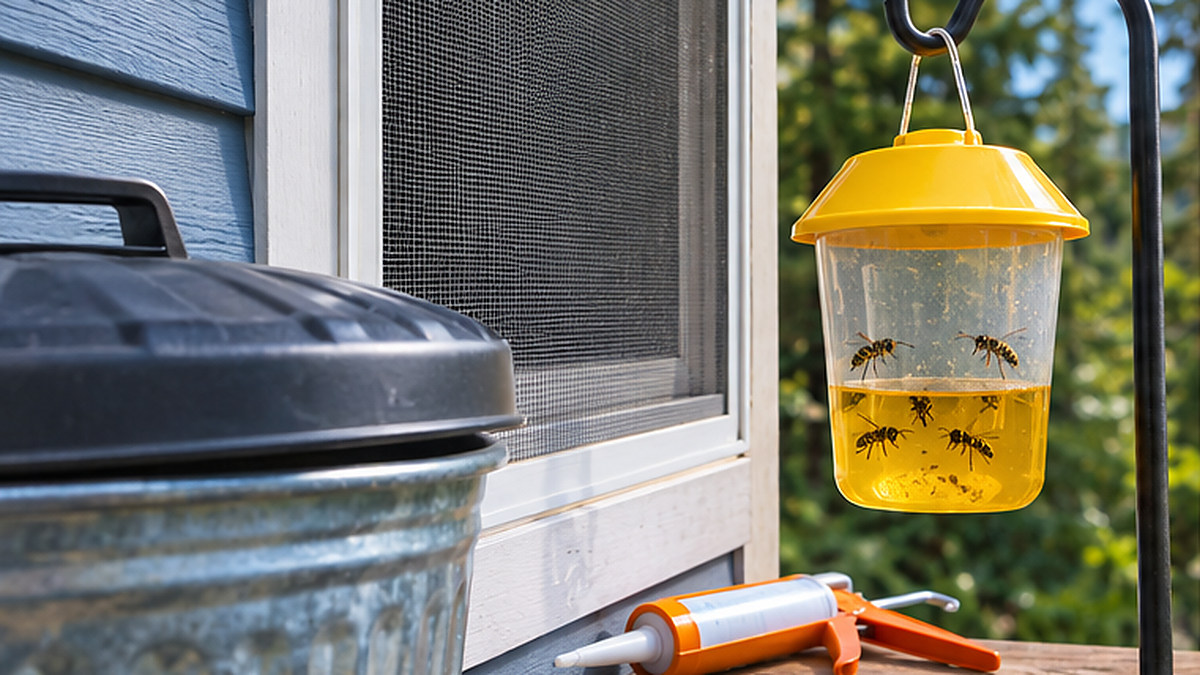 Prevention starts in spring and pays off all summer. Work through this list before the first workers appear:
- Seal cracks around siding, soffits, vents and utility lines.
- Trim shrubs and branches that touch the house, where sheltered nests start.
- Fill abandoned burrows in the lawn. Yellow jackets often move into old rodent tunnels, so managing the rodents that dig them removes ready-made nest sites.
- Use trash cans with locking lids and rinse recycling before it goes out.
- Feed pets indoors, or pick up bowls as soon as they finish.
- Clean fish and game well away from patios, decks and play areas.
| When | What to do |
|---|---|
| Late May to early June | Hang queen traps, seal gaps and walk the yard looking for holes in the ground. |
| June | Trim shrubs, fill abandoned burrows and set up tight-lidded trash and compost. |
| Mid July to late August | Peak foraging. Cover food and drinks, empty trash often and swap trap bait weekly. |
| September | Colonies are at full size and defensive. Leave nests alone and call a technician if one is near activity. |
| After the first hard frost | Workers die and old nests sit empty. Clear fallen fruit and seal gaps for next spring. |
Sealing in fall also keeps out other insects that look for shelter as temperatures drop, and a broader seasonal treatment plan can cover them alongside yellow jackets.
Why You Shouldn’t Remove a Yellow Jacket Nest Yourself
Yellow jackets can sting many times, unlike honey bees. Guard wasps at a nest entrance use chemical signals to warn the colony of intruders, so one disturbance can bring many defenders. Many nests sit underground or inside wall voids, which makes them hard to see and harder to reach. Home treatments such as pouring liquids into a nest or spraying the entrance can provoke a defensive swarm.
How Dangerous Are Yellow Jacket Stings?
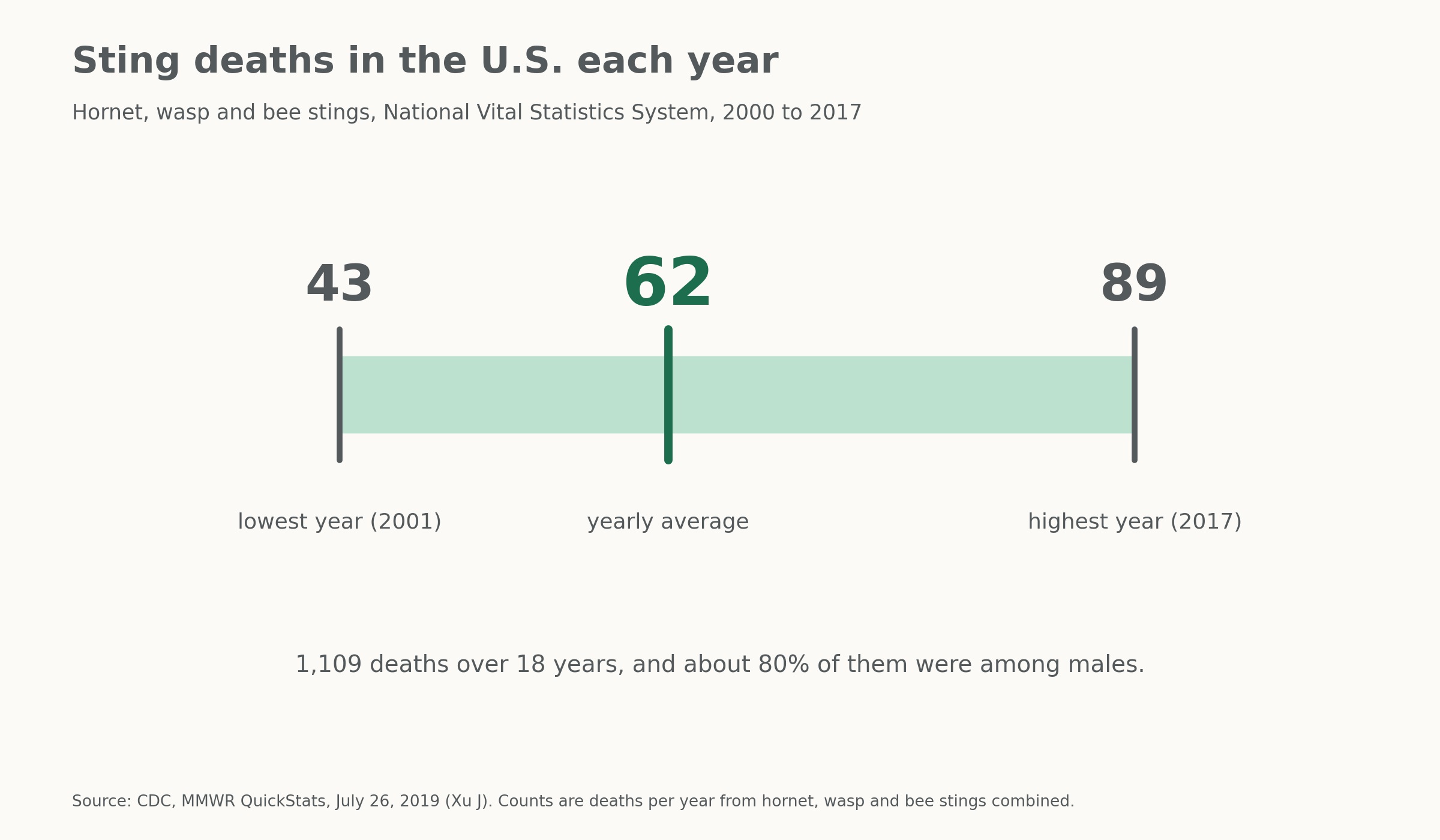
For most people a sting means pain, itching and swelling that fade in a few days. For some it is far more serious. CDC records show that hornet, wasp and bee stings killed an average of 62 people a year in the United States from 2000 to 2017.
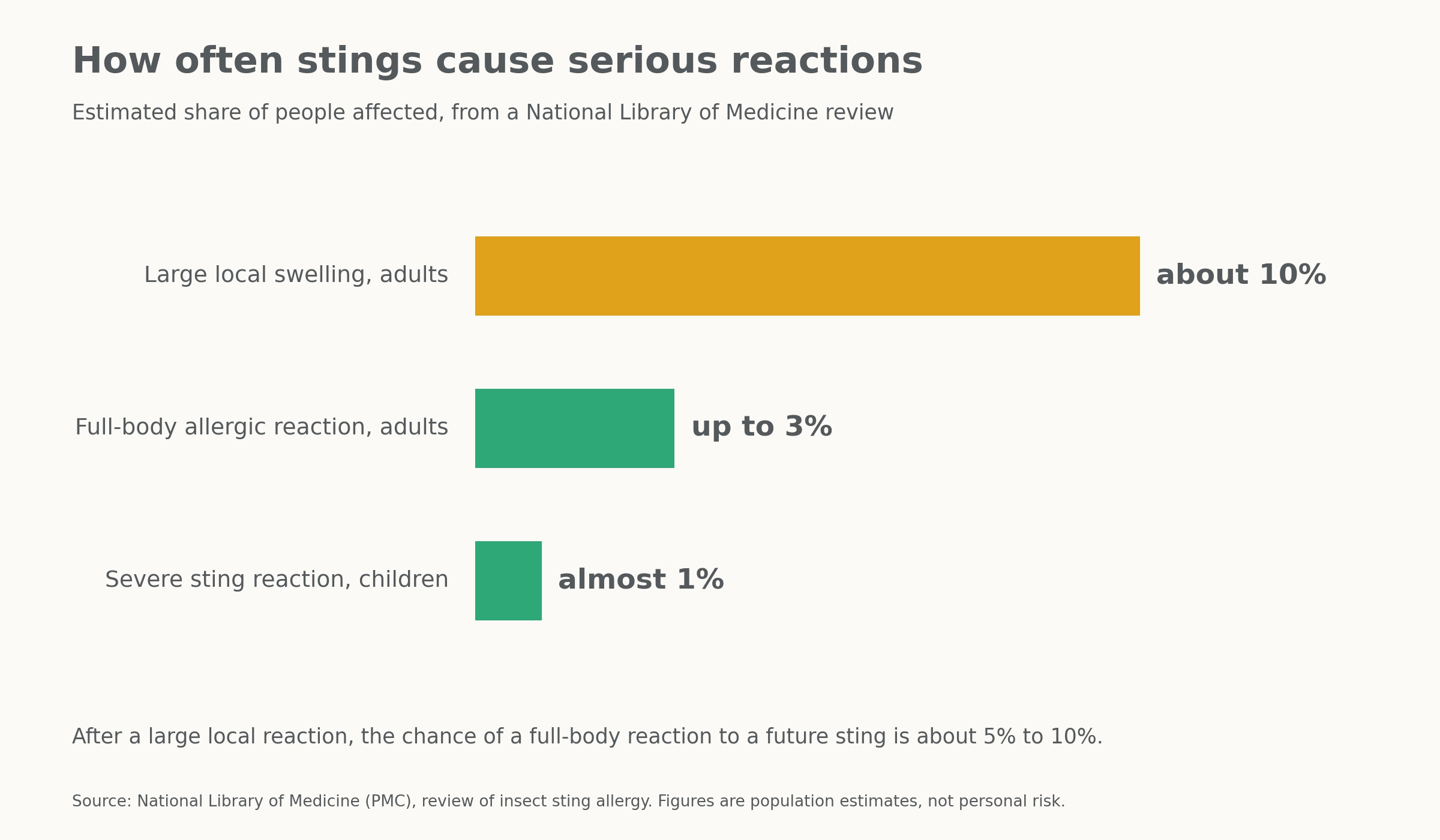
A National Library of Medicine review estimates that about 10 percent of adults develop large local swelling after a sting, up to 3 percent have full-body allergic reactions and almost 1 percent of children have severe reactions. After a large local reaction, the chance of a full-body reaction to a future sting is about 5 to 10 percent.
If someone is stung:
- Wash the area with soap and water and apply a cold pack to reduce swelling.
- Stay with the person and watch closely for allergic symptoms.
- Call 911 for trouble breathing, swelling of the face, lips or throat, dizziness, vomiting or hives spreading beyond the sting.
- If a doctor has prescribed an epinephrine auto-injector, use it as directed.
A licensed technician treats nests with protective equipment and the right products, which is why stinging insect removal for Alaska homes is the safer route.
When to Call a Professional for Yellow Jackets
Call a technician when a nest is near a door, play area or walkway, when you see wasps entering a wall or vent, when anyone in the home has a sting allergy, or when traps fill up faster than you can empty them. Since 1965, Pied Piper Pest Control has helped Alaska families and businesses handle stinging insects.
Treatment That Reaches the Whole Colony
Spraying the wasps you see leaves the colony behind. Technicians locate the nest, identify the species and treat the colony itself, using protective gear and timing the work for when wasps are least active. They also check for a second nest nearby, since several colonies can share a yard.
Protection for Homes
A technician can seal the gaps that let yellow jackets into walls and attics, remove existing nests and set up a spring plan so problems do not return. Ask about year-round protection for your home if you want seasonal visits instead of one-time treatments.
Protection for Businesses
Patios, dumpsters and loading docks attract yellow jackets in late summer, and a single sting can cost a business a customer. Pest plans for restaurants, lodges and other businesses combine nest removal, sanitation advice and scheduled monitoring through the season.
Whether you have one nest or a yard full of wasps, you can schedule a visit with a licensed technician and get a plan before the next season starts.
Frequently Asked Questions About Yellow Jackets
What smell do yellow jackets hate the most?
Peppermint, clove, lemongrass and eucalyptus are the scents most often used against yellow jackets, and wormwood and mint plants add a living layer. No smell keeps them away completely, so pair scents with covered food and sealed trash.
Does vinegar repel yellow jackets?
Not reliably. The active ingredient in vinegar, acetic acid, is better known as a bait. In Alaska trapping trials, acetic acid alone caught no more common yellowjackets than an unbaited trap, while acetic acid combined with isobutanol drew them in large numbers. For a home-made trap, meat or fish bait works better in late summer.
Do fake wasp nests keep yellow jackets away?
There is little research showing that they do, and yellow jackets that nest underground never see them. Treat a decoy as an optional extra at best, never as a substitute for covered food and sealed entry points.
When are yellow jackets most aggressive in Alaska?
Late summer. Alaska trapping data show the common yellowjacket is most abundant from mid July to late August, when colonies are at their largest and workers hunt hardest for food. Activity fades after the first hard frost.
How far from my patio should I hang a yellow jacket trap?
Hang traps at least 20 feet from where people sit or eat so the trap pulls wasps away from the gathering, and keep them out of children’s reach.
Do yellow jackets reuse the same nest every year?
No. Workers die in winter, only mated queens survive, and a colony does not reuse an old nest. A new queen starts fresh each spring, often in a sheltered spot nearby, so sealing gaps and filling abandoned burrows in spring matters more than removing last year’s nest.
Can I remove a yellow jacket nest myself?
It is not recommended. Guard wasps send chemical alarm signals when a nest is disturbed, yellow jackets can sting repeatedly, and many nests are hidden underground or inside wall voids. A licensed technician has the protective gear and products to treat the whole colony safely.
Are essential oils safe around pets?
Some are not. Tea tree, eucalyptus and peppermint oils can harm cats and dogs, so keep sprays and diffusers out of reach and away from pet areas, and ask a veterinarian before using them near animals.
Categorised in: Insect Control
This post was written by Pied Piper Team