
What Causes a Booklice Infestation and How Do You Fix It?
April 1, 2026 9:13 pmIf you have ever noticed tiny, pale insects crawling along bookshelves, cardboard boxes, or even pantry items, you might have found yourself asking one question: what exactly are these things, and why are they here? A booklice infestation can feel confusing at first because these pests do not behave like the more familiar insects people typically deal with. They are subtle, quiet, and often go unnoticed until their numbers begin to grow.
At Pied Piper Pest Control, we regularly help homeowners and businesses across Alaska track down the source of these small but persistent pests. While booklice are not dangerous in the traditional sense, they are a clear indicator that something in your indoor environment needs attention. More often than not, that “something” comes down to moisture, storage conditions, and overlooked materials that create the perfect habitat for them to thrive.
The good news is that once you understand what causes a booklice infestation and how these pests operate, you can take practical steps to eliminate them and prevent them from coming back. Let’s break it down in a way that actually makes sense and helps you move forward with confidence.
What Is a Booklice Infestation?
A booklice infestation refers to the presence of psocids, which are tiny, soft-bodied insects that feed primarily on mold, mildew, and microscopic organic matter. Despite their name, booklice are not related to lice and do not bite humans or pets. Instead, they are drawn to environments where moisture allows mold to grow.
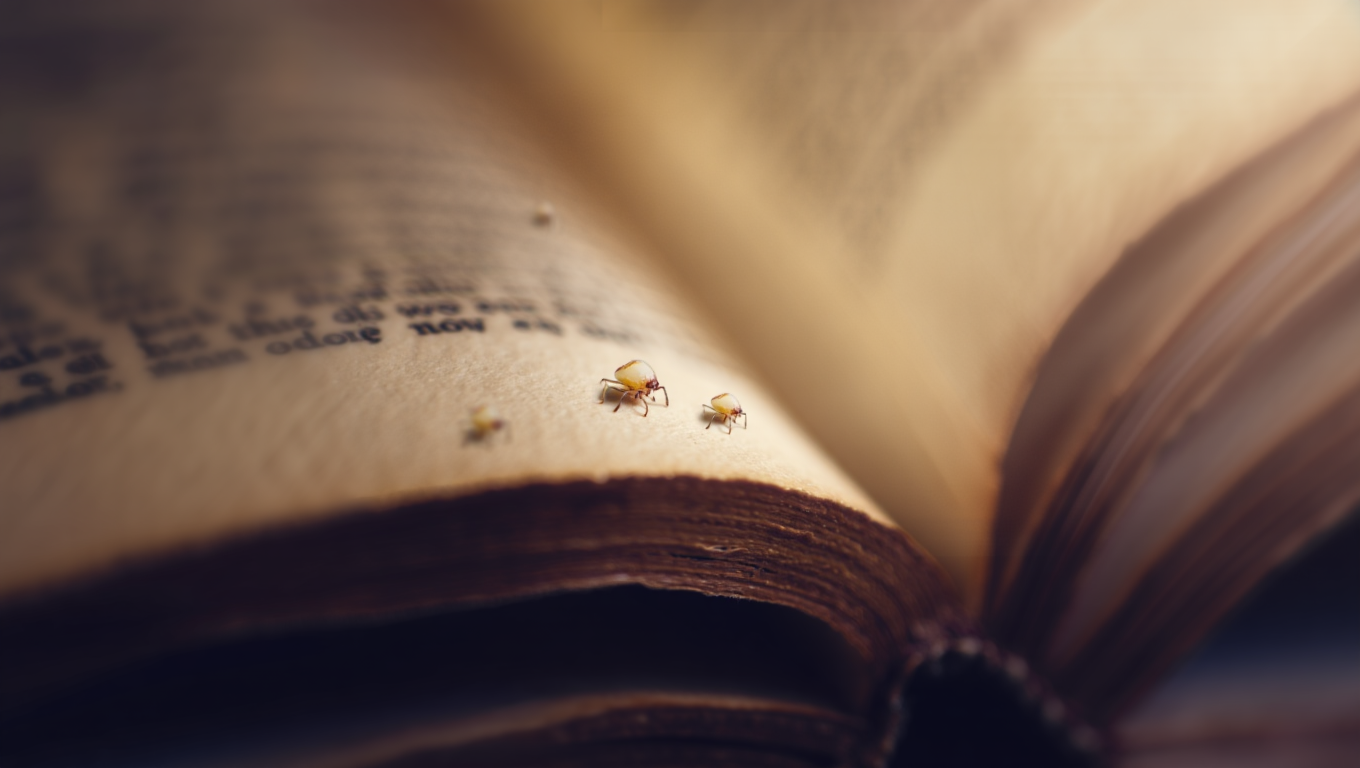
Booklice are typically light brown, gray, or translucent and measure only about 1 millimeter in length. Because of their size, they are easy to miss until they gather in noticeable clusters. You may spot them along the spines of books, inside storage boxes, or near window sills where condensation tends to form.
What makes a booklice infestation particularly frustrating is how quietly it develops. These insects do not create obvious damage right away, and they do not make noise or leave behind dramatic signs. Instead, they slowly build their population in the background, taking advantage of conditions that are often easy to overlook.
Why booklice infestation problems involve humidity
If there is one factor that consistently drives a booklice infestation, it is humidity. Booklice depend on moisture to survive because their primary food source is mold. When humidity levels rise above about 60 percent, mold can begin to form on a wide range of surfaces, even if it is not immediately visible.
This creates an ideal feeding ground for booklice. In fact, you can think of them as tiny opportunists that show up when moisture problems are present. They are not the root issue, but rather a symptom of an environment that is too damp.
In Alaska, where seasonal changes, insulation challenges, and indoor heating can all affect moisture levels, it is not uncommon for homes to experience pockets of elevated humidity. Basements, crawl spaces, and poorly ventilated rooms are especially vulnerable. Once these areas become damp enough, booklice can move in and begin reproducing quickly.
So, if you are seeing booklice, the real question is not just how to get rid of them. It is also how to control the moisture that invited them in the first place.
Where Booklice Commonly Hide Indoors
One of the reasons a booklice infestation can be tricky to deal with is that these pests are excellent at finding hidden, undisturbed areas. They are not interested in open, high-traffic spaces. Instead, they seek out quiet corners where moisture and organic material are readily available.
Materials that attract booklice indoors
Booklice are drawn to materials that can support mold growth or contain organic particles. This includes more than just books, despite what their name suggests.
Common hotspots include:
- Books, magazines, and paper products stored in humid areas
- Cardboard boxes, especially those kept in basements or garages
- Wallpaper and the glue behind it
- Stored clothing, linens, or fabrics that have absorbed moisture
- Pantry items such as flour, cereal, and other dry goods
- Wooden furniture or shelving that retains humidity
These materials provide both shelter and a food source. Over time, even a small amount of moisture can lead to microscopic mold growth, which is all booklice need to survive.
Another common hiding spot is behind walls or inside insulation where condensation may occur. These areas are rarely disturbed, allowing booklice populations to grow without interruption. By the time they become visible, they may already be well established.
Effective Booklice Control Methods
Eliminating a booklice infestation requires a different approach than dealing with more aggressive pests. Because booklice rely on environmental conditions rather than direct access to food scraps, the solution focuses on changing those conditions.
The first and most important step is reducing humidity. This often involves a combination of improved ventilation, dehumidifiers, and addressing any underlying moisture issues such as leaks or condensation. Bringing indoor humidity levels below 50 percent can make a significant difference in stopping booklice from thriving.
Next, it is important to remove or treat affected materials. Severely infested items, such as damp cardboard boxes or heavily contaminated paper goods, may need to be discarded. For items you want to keep, thorough drying and cleaning can help eliminate both the insects and their food source.
Regular cleaning also plays a key role. Vacuuming cracks, crevices, and shelving areas can help remove booklice and any organic debris they rely on. Wiping down surfaces with appropriate cleaners can further reduce the likelihood of mold returning.
In some cases, targeted pest control treatments may be necessary, especially if the infestation is widespread or difficult to access. This is where professional support becomes especially valuable.
Preventing future booklice outbreaks
Once you have addressed the immediate issue, prevention becomes the priority. The goal is to create an environment that is simply not appealing to booklice.
Start by monitoring humidity levels throughout your home. Using a hygrometer can help you keep track and make adjustments as needed. Pay special attention to areas that are prone to moisture, such as basements, bathrooms, and storage spaces.
Improving airflow is another effective strategy. Opening vents, using fans, and ensuring proper insulation can all help reduce condensation. In colder climates, managing the balance between heating and ventilation is especially important.
Storage practices also make a difference. Instead of using cardboard boxes, consider plastic bins with secure lids. Keep items off the floor and away from walls where moisture can accumulate. Rotating stored items periodically can help you catch potential issues early.
Finally, regular inspections can go a long way. Taking a few minutes to check vulnerable areas can help you spot signs of moisture or pest activity before they turn into a larger problem.
Bringing Your Space Back Under Control
A booklice infestation can feel like an unexpected nuisance, especially when it appears in places you thought were clean and well-maintained. However, once you understand that these pests are closely tied to moisture and environmental conditions, the situation becomes much more manageable.
At Pied Piper Pest Control, we believe in addressing both the symptoms and the root cause. Simply removing the insects is not enough if the conditions that attracted them remain unchanged. That is why our approach focuses on identifying moisture issues, treating affected areas, and helping you implement long-term solutions that keep your space protected.
Serving communities across Alaska, our team understands the unique challenges that come with maintaining a comfortable, pest-free home in this climate. From seasonal humidity shifts to hidden condensation problems, we have seen it all and know how to handle it effectively.
If you are dealing with a persistent booklice infestation or want to make sure your home stays protected moving forward, we are here to help. Reach out to Pied Piper Pest Control at https://alaskapest.com/ to schedule an inspection or learn more about our services. A healthier, more comfortable home is well within reach, and we would be glad to help you get there.
Categorised in: Insect Control
This post was written by Ken Perry
Comments are closed here.