
Why Are Clover Mites in Your House and How Do You Stop Them?
February 6, 2026 11:56 pmClover mites are one of those pests that often catch homeowners off guard. They are tiny, easy to miss at first, and tend to appear suddenly in large numbers. While they do not bite, sting, or cause structural damage, clover mites in your house can be frustrating, messy, and difficult to manage without the right approach. These reddish-brown specks often show up on windowsills, walls, and sunny surfaces, especially during seasonal transitions in Alaska. Understanding why they enter homes, how to identify them correctly, and what steps you can take to prevent future infestations is the key to keeping your living space comfortable and pest-free.
Why Clover Mites Invade Homes
Clover mites are outdoor pests by nature. They typically live in lawns, gardens, and areas with lush vegetation where they feed on grasses and ornamental plants. Homes are not their intended habitat, but certain environmental conditions make indoor spaces appealing or unavoidable. When populations surge or outdoor conditions become less favorable, clover mites look for shelter, warmth, and stable environments. Residential structures often provide all three.
Seasonal changes play a major role in their behavior. Clover mites are most active during cooler periods of the year, particularly in spring and fall. As temperatures fluctuate, they migrate from outdoor vegetation toward foundations, siding, and eventually indoors. Once they find a way inside, they can gather in noticeable numbers, especially near windows and light sources.
Another factor that contributes to clover mites in your house is landscaping. Well-fertilized lawns, thick grass, and vegetation planted directly against the foundation create ideal conditions for mite populations to grow. When their food source is abundant outside, the likelihood of spillover into the home increases.
Why clover mites in your house spike in spring
Spring is the most common time homeowners notice a sudden increase in clover mite activity. As snow melts and temperatures rise, vegetation begins to grow rapidly. Clover mites feed heavily during this period, reproducing quickly and expanding their populations.
Several spring-specific factors contribute to indoor invasions:
- Rapid grass growth fueled by fertilizer and moisture
- Mild daytime temperatures combined with cool nights
- Increased sunlight warming exterior walls and windows
- Melting snow pushing mites toward higher, drier ground
As clover mites move upward along foundations and siding, they often encounter small cracks or gaps that allow them to enter the home. Once inside, they tend to congregate on sunny walls and windowsills, making their presence hard to ignore.
How to Identify Clover Mites Indoors
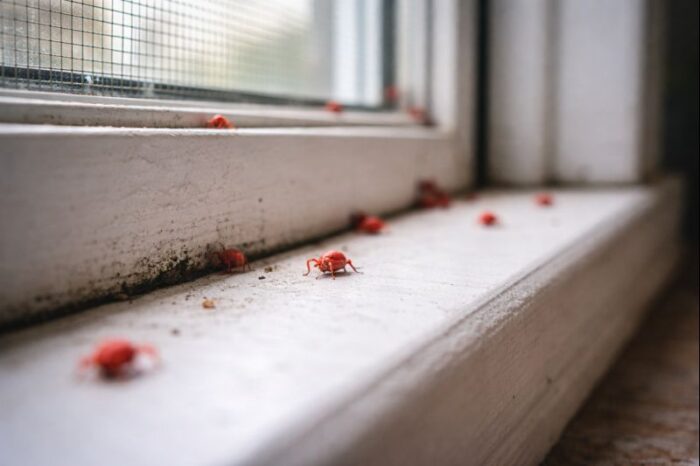
Correct identification is an important first step in dealing with any pest issue. Clover mites are extremely small, about the size of a pinhead, and are often mistaken for ticks or other mites. Their color can range from reddish brown to dark green, depending on what they have been feeding on.
One distinguishing feature of clover mites is their long front legs, which are sometimes mistaken for antennae. They move slowly and are most visible when crawling across light colored surfaces. When crushed, they leave behind a red stain, which is one of the main reasons homeowners find them so aggravating.
Common signs of clover mites in your house include:
- Tiny red or brown specks moving along walls or windows
- Clusters of mites near sunny windowsills
- Red smears left behind when mites are crushed
- Increased activity during warm afternoons in spring or fall
Unlike some pests, clover mites do not nest or reproduce indoors. This means that while they can be persistent, an indoor infestation is usually the result of ongoing entry from outside rather than a breeding population inside the home.
Entry points that clover mites use to get indoors
Clover mites do not chew or bore their way into structures. Instead, they take advantage of existing openings that may be invisible to the untrained eye. Even newer homes can have small vulnerabilities that allow these tiny pests to slip inside.
Common entry points include:
- Cracks in the foundation or exterior walls
- Gaps around window frames and door seals
- Utility line and pipe penetrations
- Weep holes and siding seams
- Poorly sealed vents or crawl space openings
Because clover mites are so small, even hairline cracks can provide enough space for entry. This is why infestations often seem to appear suddenly, even when no obvious openings are visible.
Effective Clover Mite Prevention Strategies
Preventing clover mites in your house requires a combination of exterior management, structural maintenance, and professional expertise. While it may be tempting to focus solely on eliminating mites once they are indoors, long-term success depends on stopping them before they ever cross the threshold.
One of the most effective prevention methods is modifying the area immediately surrounding your home. Creating a vegetation-free buffer zone between your foundation and your lawn can significantly reduce mite activity near the structure. This deprives them of food sources close to entry points and discourages migration indoors.
Additional prevention strategies include:
- Maintaining a 12 to 24 inch gravel or mulch barrier around the foundation
- Avoiding heavy fertilization of grass near the house
- Keeping shrubs and plants trimmed away from exterior walls
- Sealing cracks and gaps with high-quality caulk
- Repairing damaged screens, weather stripping, and siding
Indoor measures can also help manage occasional intruders. Vacuuming mites with a hose attachment is preferable to crushing them, as it avoids staining. Sticky traps placed near windows can help monitor activity levels, though they are not a standalone solution.
Long-term solutions for clover mite infestations
While do-it-yourself methods can provide temporary relief, long-term control of clover mites often requires professional pest management. A trained technician can identify contributing factors that homeowners may overlook and apply targeted treatments where they are most effective.
Professional solutions typically focus on:
- Exterior perimeter treatments to reduce mite populations
- Targeted applications around entry points and foundations
- Recommendations for landscaping adjustments
- Ongoing monitoring during peak seasons
Because clover mites are seasonal and weather-dependent, a proactive approach is essential. Preventive treatments applied at the right time of year can significantly reduce the likelihood of clover mites in your house returning season after season.
It is also important to work with a pest control provider who understands the unique challenges of Alaska’s climate. Temperature swings, snow cover, and seasonal vegetation patterns all influence pest behavior. Local expertise ensures that treatments are timed and tailored appropriately.
Take Action Against Clover Mites Today
If you are dealing with clover mites in your house or want to prevent them before they become a recurring problem, professional help can make all the difference. Pied Piper Pest Control has been Alaska’s premier pest control and pest removal service since 1965. We are proud to be a locally owned and operated small business, and we make it a point to always put our clients’ needs and comforts above all else.
When you think of quality pest control in Alaska, you should be thinking about Pied Piper Pest Control. Locally owned and operated, we have built a reputation for providing unparalleled insect and rodent services to the residents and businesses of Alaska for over 50 years. Our team of highly skilled and knowledgeable technicians specializes in a wide range of pest control services, including insects, rodents, ornamental tree pests, and squirrel capture.
We know that you have plenty of options for pest removal in Alaska, but we promise that if you hire us for the job, you will never get anything less than our best work. Contact us to schedule an inspection or learn more about how we can help protect your home and restore your peace of mind.
Categorised in: Insect Control
This post was written by Ken Perry
Comments are closed here.